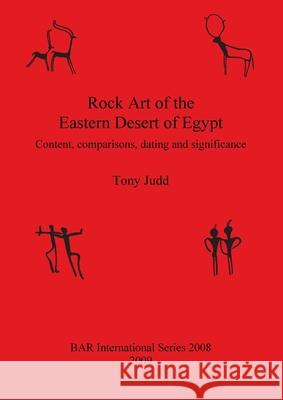
The objective of this research is to advance the understanding of the Egyptian Eastern Desert region petroglyphs by means of three steps: 1) To order and analyse the available data; 2) To compare the Eastern Desert petroglyphs with those of neighbouring regions and 3) To determine what the Eastern Desert petroglyphs can tell us about the people responsible for them. The study then moves towards an interpretation of the petroglyphs in terms of what they can tell us about the origins and development of Egyptian society.
The objective of this research is to advance the understanding of the Egyptian Eastern Desert region petroglyphs by means of three steps: 1) To ord...
Edited by Maggie Morrow, Mike Morrow, Tony Judd and Geoff Phillipson
Consultant Editor Pete Cherry Foreword by Toby Wilkinson
We are used to thinking of Egypt, ancient and modern, in terms of the Nile valley: well-watered, green and fertile, a narrow strip of life-sustaining land between vast tracts of hostile desert. But this accustomed view is an illusion: even today, the deserts of Egypt - which seem so inhospitable - support flora, fauna and people. In prehistoric times, the climate was wetter and life was much more abundant. The deserts' early inhabitants left behind...
Edited by Maggie Morrow, Mike Morrow, Tony Judd and Geoff Phillipson
Consultant Editor Pete Cherry Foreword by Toby Wilkinson