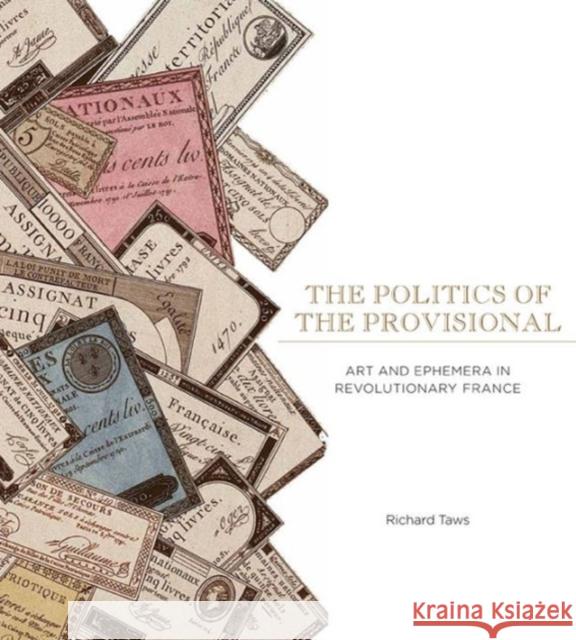
In revolutionary France the life of things could not be assured. War, shortage of materials, and frequent changes in political authority meant that few large-scale artworks or permanent monuments to the Revolution's memory were completed. On the contrary, visual practice in revolutionary France was characterized by the production and circulation of a range of transitional, provisional, ephemeral, and half-made images and objects, from printed paper money, passports, and almanacs to temporary festival installations and relics of the demolished Bastille. Addressing this mass of images...
In revolutionary France the life of things could not be assured. War, shortage of materials, and frequent changes in political authority meant that...
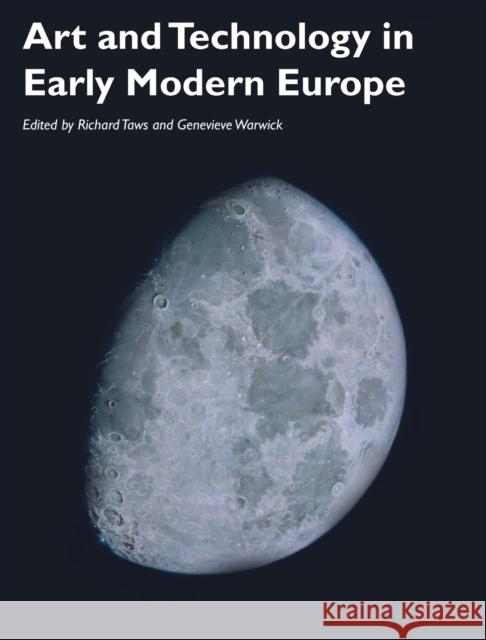
In 12 essays by a distinguished group of art historians, Art and Technology in Early Modern Europe explores the relationship between artistic and technological advances from the Renaissance to the Industrial Revolution.
Provides a broad definition of technology for this period and addresses the influence of technological shifts on the history of early modern art
Covers c.1420-1820, the time period between the advent of the printed image and that of the photographically produced image
Discusses a wide range of early modern artists' tools, instruments,...
In 12 essays by a distinguished group of art historians, Art and Technology in Early Modern Europe explores the relationship between artisti...