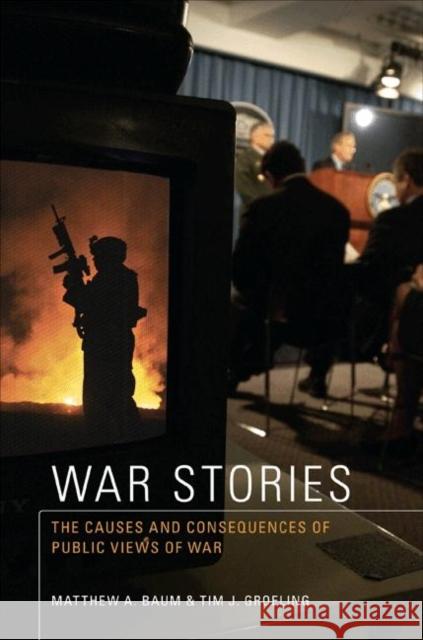
How does the American public formulate its opinions about U.S. foreign policy and military engagement abroad? War Stories argues that the media systematically distort the information the public vitally needs to determine whether to support such initiatives, for reasons having more to do with journalists' professional interests than the merits of the policies, and that this has significant consequences for national security. Matthew Baum and Tim Groeling develop a "strategic bias" theory that explains the foreign-policy communication process as a three-way interaction among the...
How does the American public formulate its opinions about U.S. foreign policy and military engagement abroad? War Stories argues that the me...
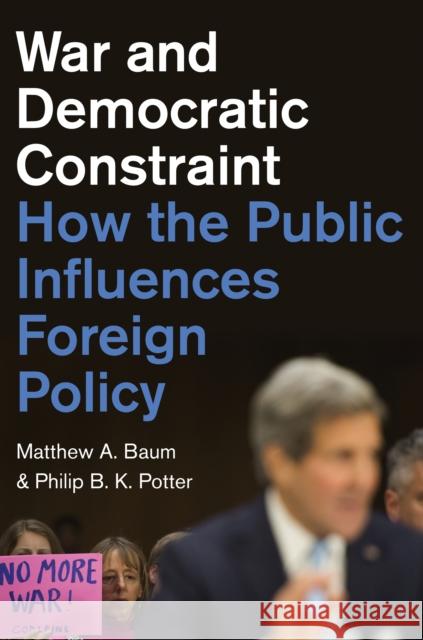
Why do some democracies reflect their citizens' foreign policy preferences better than others? What roles do the media, political parties, and the electoral system play in a democracy's decision to join or avoid a war? War and Democratic Constraint shows that the key to how a government determines foreign policy rests on the transmission and availability of information. Citizens successfully hold their democratic governments accountable and a distinctive foreign policy emerges when two vital institutions--a diverse and independent political opposition and a robust media--are present...
Why do some democracies reflect their citizens' foreign policy preferences better than others? What roles do the media, political parties, and the ...
Why do some democracies reflect their citizens' foreign policy preferences better than others? What roles do the media, political parties, and the electoral system play in a democracy's decision to join or avoid a war? War and Democratic Constraint shows that the key to how a government determines foreign policy rests on the transmission and availability of information. Citizens successfully hold their democratic governments accountable and a distinctive foreign policy emerges when two vital institutions--a diverse and independent political opposition and a robust media--are present...
Why do some democracies reflect their citizens' foreign policy preferences better than others? What roles do the media, political parties, and the ...