This study provides an overview of the current policy and regulatory environment regarding sustainable construction materials in the building sector in Europe and North America, and, where applicable, offers a commentary on the effectiveness of such regimes in driving the adoption of wood products. The study s objective has been to conduct a broad survey across a range of policies, initiatives and programmes in order to document the current circumstances as a starting point for further discussions, technical meetings and policy debates with a view to enhance the use of wood in buildings...
This study provides an overview of the current policy and regulatory environment regarding sustainable construction materials in the building sector i...
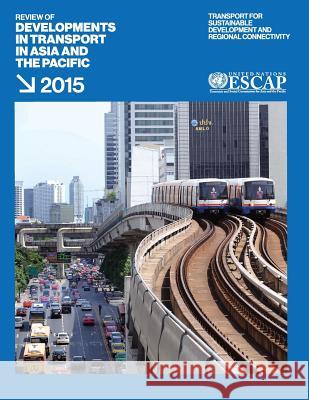
This latest biennial Review sets out transport developments in the ESCAP region, focusing on trade trends and forecasts, and their effect on transport, while also taking into account the external factors affecting transport systems and infrastructure provision, in the context of transport s contribution the UN global agenda on sustainable development. The Review acts as a mechanism for reporting on the achievements made in the provision of transport infrastructure and services; the challenges remaining in regional, urban and rural connectivity; and on public health issues such as road safety...
This latest biennial Review sets out transport developments in the ESCAP region, focusing on trade trends and forecasts, and their effect on transport...
The report, From the Istanbul Programme of Action to the 2030 Agenda for Sustainable Development, explores effective ways to address the challenge for simultaneous implementation of the Istanbul Programme of Action and the 2030 Agenda for Sustainable Development in Asia-Pacific least developed countries. For that purpose, the report examines to what extent the 251 actions in the Istanbul Programme of Action support the achievement of specific Goals and targets of the 2030 Agenda. The report also proposes a unique analytical framework for the prioritization and sequencing of the 2030 Agenda in...
The report, From the Istanbul Programme of Action to the 2030 Agenda for Sustainable Development, explores effective ways to address the challenge for...
Despite consensus on the transformative potential of STI, there remains a lack of clarity on how Least Developed Countries (LDCs) can effectively implement it for inclusive and sustainable development. With limited financial resources it is not feasible for LDCs to simply invest significantly in research and development (R&D) activity and develop world-class universities and infrastructure. This publication highlights key innovation polices which have the potential to enable LDCs to reap the benefits of innovation in a cost effective manner.
Despite consensus on the transformative potential of STI, there remains a lack of clarity on how Least Developed Countries (LDCs) can effectively impl...
In its latest edition, the Foreign Direct Investment in Latin America and the Caribbean report analyzes in-depth the FDI received by the Caribbean, where these flows are much more significant than in the rest of the region as a proportion of Gross Domestic Product (GDP). The study also examines the impact of FDI on the environment, which has not been measured or regulated sufficiently by countries in the region.
In its latest edition, the Foreign Direct Investment in Latin America and the Caribbean report analyzes in-depth the FDI received by the Caribbean, wh...
The Independent Evaluation Office (IEO) of UNDP in partnership with the Royal Thai Government (RTG) organized the 4th International Conference on National Evaluation Capacities (NEC) which took place in Bangkok, 26-30 October, 2015. The conference was jointly organized and conducted in parallel with the International Development Evaluation Association (IDEAS) Global Assembly 2015, and brought together 450 participants from 100 countries, which made it the largest evaluation event globally by government and country participation. The theme of the conference this year was Blending Evaluation...
The Independent Evaluation Office (IEO) of UNDP in partnership with the Royal Thai Government (RTG) organized the 4th International Conference on Nati...
The European Agreement concerning the International Carriage of Dangerous Goods by Road is intended to increase the safety of international transport of dangerous goods by road. Regularly amended and updated since its entry into force, it contains the conditions under which dangerous goods may be carried internationally. This version has been prepared on the basis of amendments applicable as from 1 January 2017. It contains in particular new or revised provisions concerning for vehicles and machineries; battery powered vehicles and equipment; marking and labeling for lithium batteries in...
The European Agreement concerning the International Carriage of Dangerous Goods by Road is intended to increase the safety of international transport ...
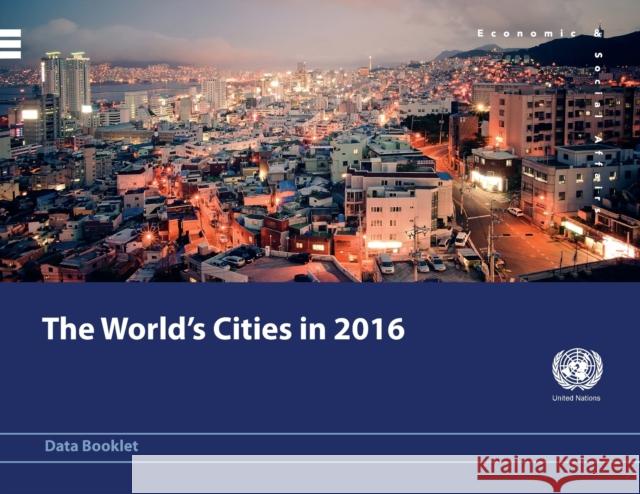
In 2016, an estimated 54.5 per cent of the world's population lived in urban settlements. By 2030, urban areas are projected to house 60 per cent of people globally and one in every three people will live in cities with at least half a million inhabitants. Understanding the key trends in urbanization likely to unfold over the coming years is crucial to the implementation of the 2030 Agenda for Sustainable Development and for efforts to forge a new framework of urban development during the Habitat III conference scheduled to be held in Quito, Ecuador in October 2016. This data booklet...
In 2016, an estimated 54.5 per cent of the world's population lived in urban settlements. By 2030, urban areas are projected to house 60 per cent of p...
Human rights issues relating to traditional justice systems in Africa have rarely been addressed in detail. This publication defines the nature and characteristics of traditional justice systems, including issues related to jurisdiction, community involvement, composition, and a primary focus on restorative justice. It addresses how traditional justice has been reinforced by cultural and traditional values, proximity to the people and a lack of access to formal courts. Traditional justice systems also have human rights concerns which need to be monitored. Issues relating to fair trial, ill...
Human rights issues relating to traditional justice systems in Africa have rarely been addressed in detail. This publication defines the nature and ch...