The "texts" of Russian artist and thinker Daniil Kharms (1905-1942) were so many and varied and often unique (narrative, dramatic, philosophical, poetic, mathematical, pictographic, diagrammatic, musical, biographical) that they defied categorizationand, thus, thorough study or appreciationthrough much of the twentieth century. This book, the first in English to view Kharms s oeuvre in its entirety, is also the first to offer a complete, inclusive, and coherent understanding of the overall project of this artist and writer now considered a major figure in the modernist canon of...
The "texts" of Russian artist and thinker Daniil Kharms (1905-1942) were so many and varied and often unique (narrative, dramatic, philosophical, p...
The "texts" of Russian artist and thinker Daniil Kharms (1905-1942) were so many and varied and often unique (narrative, dramatic, philosophical, poetic, mathematical, pictographic, diagrammatic, musical, biographical) that they defied categorization and, thus, thorough study or appreciation through much of the twentieth century. This book, the first in English to view Kharms s oeuvre in its entirety, is also the first to offer a complete, inclusive, and coherent understanding of the overall project of this artist and writer now considered a major figure in the modernist canon of Europe."
The "texts" of Russian artist and thinker Daniil Kharms (1905-1942) were so many and varied and often unique (narrative, dramatic, philosophical, poet...
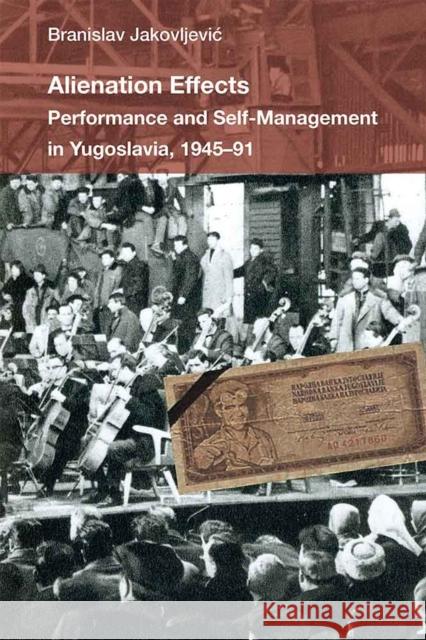
In the 1970s, Yugoslavia emerged as a dynamic environment for conceptual and performance art. At the same time, it pursued its own form of political economy of socialist self-management. Alienation Effects argues that a deep relationship existed between the democratization of the arts and industrial democracy, resulting in a culture difficult to classify. The book challenges the assumption that the art emerging in Eastern Europe before 1989 was either "official" or "dissident" art; and shows that the break up of Yugoslavia was not a result of "ancient hatreds" among its peoples but...
In the 1970s, Yugoslavia emerged as a dynamic environment for conceptual and performance art. At the same time, it pursued its own form of political e...
In the 1970s, Yugoslavia emerged as a dynamic environment for conceptual and performance art. At the same time, it pursued its own form of political economy of socialist self-management. Alienation Effects argues that a deep relationship existed between the democratization of the arts and industrial democracy, resulting in a culture difficult to classify. The book challenges the assumption that the art emerging in Eastern Europe before 1989 was either "official" or "dissident" art; and shows thatthe break up of Yugoslavia was not a result of "ancient hatreds" among its peoples but...
In the 1970s, Yugoslavia emerged as a dynamic environment for conceptual and performance art. At the same time, it pursued its own form of political e...