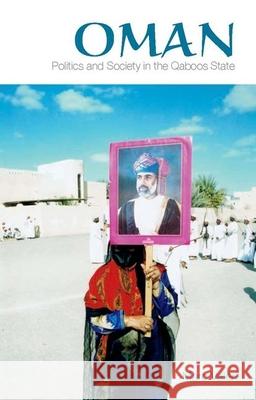
When Sultan Qaboos overthrew his father as ruler of the Persian Gulf state of Oman in 1970, with the help of British advisers, few expected him to survive long. He was unknown to his own population, and the country was poor and plagued by civil wars. Yet he has built his regime's legitimacy on a policy of national unification, the assimilation of all of Oman to the oil rentier state framework, and of his state to the person of the sultan, the incarnation of the country's "renaissance." This books seeks to understand the mechanisms of social and political perpetuation of authoritarianism in...
When Sultan Qaboos overthrew his father as ruler of the Persian Gulf state of Oman in 1970, with the help of British advisers, few expected him to sur...
When Sultan Qaboos overthrew his father as ruler of the Persian Gulf state of Oman in 1970, with the help of British advisers, few expected him to survive long. He was unknown to his own population, and the country was poor and plagued by civil wars. Yet he has built his regime's legitimacy on a policy of national unification, the assimilation of all of Oman to the oil rentier state framework, and of his state to the person of the sultan, the incarnation of the country's "renaissance." This books seeks to understand the mechanisms of social and political perpetuation of authoritarianism in...
When Sultan Qaboos overthrew his father as ruler of the Persian Gulf state of Oman in 1970, with the help of British advisers, few expected him to sur...