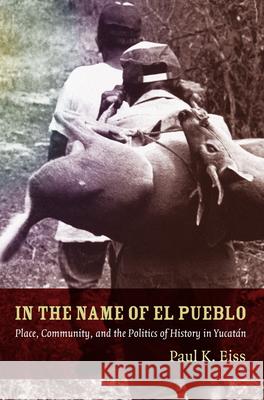
The term el pueblo is used throughout Latin America, referring alternately to small towns, to community, or to the people as a political entity. In this vivid anthropological and historical analysis of Mexico s Yucatan peninsula, Paul K. Eiss explores the multiple meanings of el pueblo and the power of the concept to unite the diverse claims made in its name. Eiss focuses on working-class indigenous and mestizo populations, examining how those groups negotiated the meaning of el pueblo among themselves and in their interactions with outsiders, including landowners, activists, and government...
The term el pueblo is used throughout Latin America, referring alternately to small towns, to community, or to the people as a political entity. In th...
The term el pueblo is used throughout Latin America, referring alternately to small towns, to community, or to the people as a political entity. In this vivid anthropological and historical analysis of Mexico s Yucatan peninsula, Paul K. Eiss explores the multiple meanings of el pueblo and the power of the concept to unite the diverse claims made in its name. Eiss focuses on working-class indigenous and mestizo populations, examining how those groups negotiated the meaning of el pueblo among themselves and in their interactions with outsiders, including landowners, activists, and government...
The term el pueblo is used throughout Latin America, referring alternately to small towns, to community, or to the people as a political entity. In th...
The concept of ""Indigenous"" has been entwined with notions of exoticism and alterity throughout Mexico's history. In Beyond Alterity, authors from across disciplines question the persistent association between indigenous people and radical difference, and demonstrate that alterity is often the product of specific political contexts.
The concept of ""Indigenous"" has been entwined with notions of exoticism and alterity throughout Mexico's history. In Beyond Alterity, authors from a...