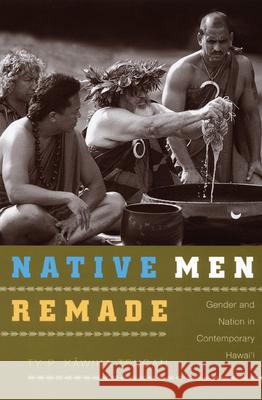
Many indigenous Hawaiian men have felt profoundly disempowered by the legacies of colonization and by the tourist industry, which, in addition to occupying a great deal of land, promotes a feminized image of Native Hawaiians (evident in the ubiquitous figure of the dancing hula girl). In the 1990s a group of Native men on the island of Maui responded by refashioning and reasserting their masculine identities in a group called the Hale Mua (the Men s House ). As a member and an ethnographer, Ty P. K wika Tengan analyzes how the group s mostly middle-aged, middle-class, and mixed-race members...
Many indigenous Hawaiian men have felt profoundly disempowered by the legacies of colonization and by the tourist industry, which, in addition to occu...
Many indigenous Hawaiian men have felt profoundly disempowered by the legacies of colonization and by the tourist industry, which, in addition to occupying a great deal of land, promotes a feminized image of Native Hawaiians (evident in the ubiquitous figure of the dancing hula girl). In the 1990s a group of Native men on the island of Maui responded by refashioning and reasserting their masculine identities in a group called the Hale Mua (the Men s House ). As a member and an ethnographer, Ty P. K wika Tengan analyzes how the group s mostly middle-aged, middle-class, and mixed-race members...
Many indigenous Hawaiian men have felt profoundly disempowered by the legacies of colonization and by the tourist industry, which, in addition to occu...