As the pace of technological change accelerates, we are increasingly experiencing a state of information overload. Statistics show that we are interrupted every three minutes during the course of the work day. Multitasking between email, cell-phone, text messages, and four or five websites while listening to an iPod forces the brain to process more and more informaton at greater and greater speeds. And yet the human brain has hardly changed in the last 40,000 years. Are all these high-tech advances overtaxing our Stone-Age brains or is the constant flood of information good for us, giving our...
As the pace of technological change accelerates, we are increasingly experiencing a state of information overload. Statistics show that we are interru...
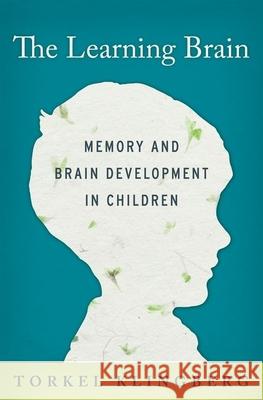
Despite all our highly publicized efforts to improve our schools, the United States is still falling behind. We recently ranked 15th in the world in reading, math, and science. Clearly, more needs to be done. In The Learning Brain, Torkel Klingberg urges us to use the insights of neuroscience to improve the education of our children. The key to improving education lies in understanding how the brain works: that is where learning takes place, after all. The book focuses in particular on "working memory"--our ability to concentrate and to keep relevant information in our head while ignoring...
Despite all our highly publicized efforts to improve our schools, the United States is still falling behind. We recently ranked 15th in the world in r...