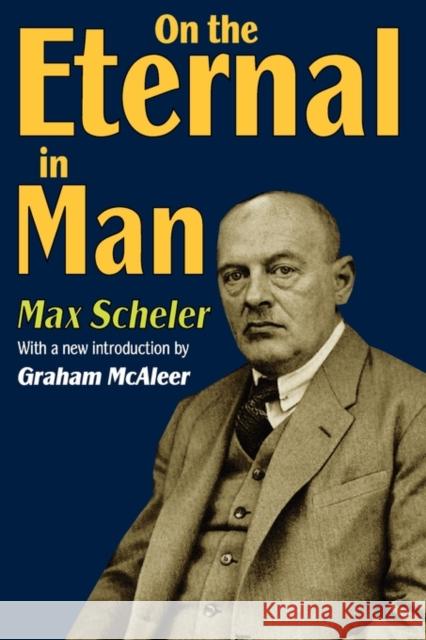
Max Scheler (1874-1928) decisively influenced German philosophy in the period after the First World War, a time of upheaval and new beginnings. Without him, the problems of German philosophy today, and its attempts to solve them would be quite inconceivable. What was new in his philosophy was that he used phenomenology to investigate spiritual realities.
The subject of On the Eternal in Man is the divine and its reality, the originality and non-derivation of religious experience. Scheler shows the characteristic quality of that which is religious. It is a particular essence...
Max Scheler (1874-1928) decisively influenced German philosophy in the period after the First World War, a time of upheaval and new beginnings. Wit...
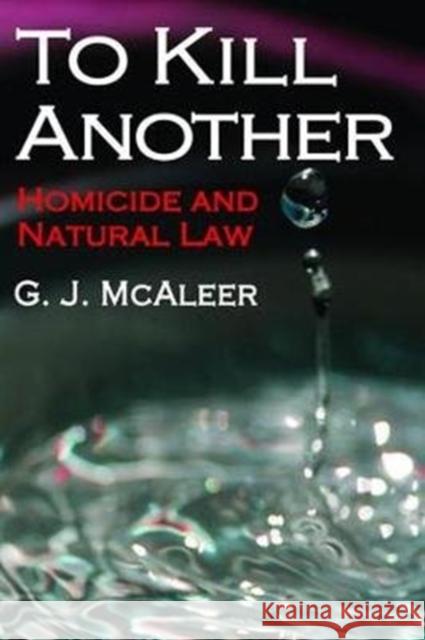
Basing his argument on natural law, Graham J. McAleer asserts that only public authority has the right to intentionally kill. He draws upon the work of Thomas Aquinas and Francisco de Vitoria, defending the claim that these natural law theorists have developed the best available theory of homicide. To have rule of law in any meaningful sense, the author argues, there must be protections for the guilty and prohibition against killing innocents. Western theories of law have drifted steadily towards the privatization of homicide, despite the fact that it runs counter to rule of law. Public acts...
Basing his argument on natural law, Graham J. McAleer asserts that only public authority has the right to intentionally kill. He draws upon the work o...
The essays in this collection, spanning 1925 to 1970, confirm Aurel Kolnai's place as one of the great conservative theorists of the twentieth century. Kolnai carefully analyzes the leading intellectual positions and thinkers of his day, the dominant social movements, and the prevailing moral influences--psychoanalysis, fascism, and National Socialism. He documents how they run counter to the architecture of civilization.
Kolnai is relatively unknown outside philosophical circles, but Politics, Values, and National Socialism provides an overview of his moral philosophy. In...
The essays in this collection, spanning 1925 to 1970, confirm Aurel Kolnai's place as one of the great conservative theorists of the twentieth cent...