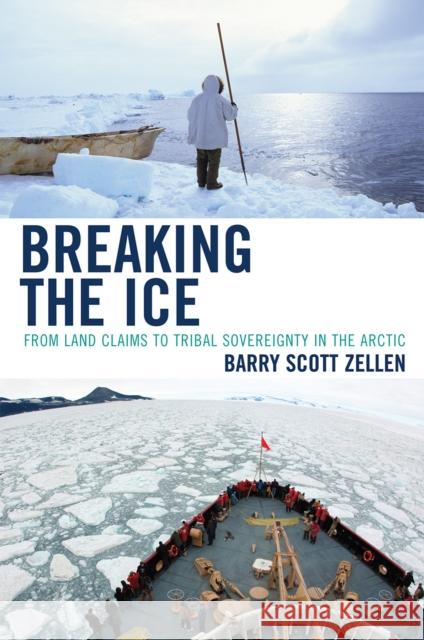
Breaking the Ice is a comparative study of the movement for native land claims and Aboriginal rights in Alaska and the Western Arctic, and the resulting political transformation as the indigenous peoples of the North gained an increasingly prominent role in the governance of their homeland and their land claims agreements paved the way toward self-government. The book is based on field research conducted by the author during his nine-year residency in the Western Arctic.
Breaking the Ice is a comparative study of the movement for native land claims and Aboriginal rights in Alaska and the Western Arctic, and the resulti...
Breaking the Ice is a comparative study of the movement for native land claims and Aboriginal rights in Alaska and the Western Arctic, and the resulting political transformation as the indigenous peoples of the North gained an increasingly prominent role in the governance of their homeland and their land claims agreements paved the way toward self-government. The book is based on field research conducted by the author during his nine-year residency in the Western Arctic.
Breaking the Ice is a comparative study of the movement for native land claims and Aboriginal rights in Alaska and the Western Arctic, and the resulti...
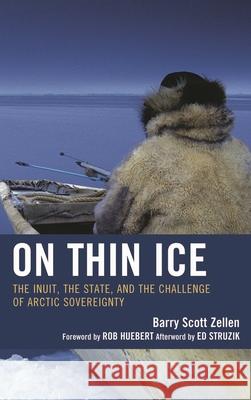
On Thin Ice explores the shifting relationship between the Inuit and the modern state in the North American Arctic, and it pays tribute to pioneering IR theorist Ken Waltz's elucidation of the "Three Images," with the addition of a new "Fourth Image" to describe a tribal level of analysis that remains salient in not only the Arctic, but in other conflict zones where tribal peoples retain many attributes of their indigenous sovereignty.
On Thin Ice explores the shifting relationship between the Inuit and the modern state in the North American Arctic, and it pays tribute to pioneering ...
The work examines the rise of the movements against globalization, modernization, and Western dominance that followed the collapse of the bipolar world and the end of the Cold War and that culminated with today's global jihadist movements. It describes how the U.S. had to adapt to this new, asymmetrical world of conflict with its strategic, doctrinal and theoretical responses to the threats of terrorism and insurgency that defined the Global War on Terror (GWOT).
Unique in the breadth of its scope, the book connects movements from the Zapatista uprising to Al Qaeda's global jihad...
The work examines the rise of the movements against globalization, modernization, and Western dominance that followed the collapse of the bipolar w...
In the decade that followed 9/11, technologies and technology policies became central to homeland security. For example, the U.S. erected new border defenses with remote sensors and biometric scanners, and deployed new autonomous air warfare capabilities, such as the drone program. Looking at efforts to restore security after 9/11, the work examines issues such as the rise in technology spending, the various scenarios of mass terror, and America's effort to ensure that future engagements will take place far from the homeland. Operation Iraqi Freedom, Iran's emergence as nuclear threat, and...
In the decade that followed 9/11, technologies and technology policies became central to homeland security. For example, the U.S. erected new border d...