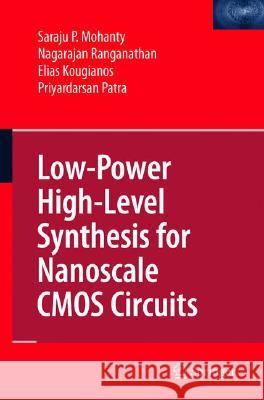
Saraju P. Mohanty Nagarajan Ranganathan Elias Kougianos
Low-Power High-Level Synthesis for Nanoscale CMOS Circuits
addresses the need for analysis, characterization, estimation, and optimization of the various forms of power dissipation in the presence of process variations of nano-CMOS technologies. The authors show very large-scale integration (VLSI) researchers and engineers how to minimize the different types of power consumption of digital circuits. The material deals primarily with high-level (architectural or behavioral) energy dissipation because the behavioral level is not as highly abstracted as the system level nor is it as...
Low-Power High-Level Synthesis for Nanoscale CMOS Circuits
addresses the need for analysis, characterization, estimation, and optimizatio...
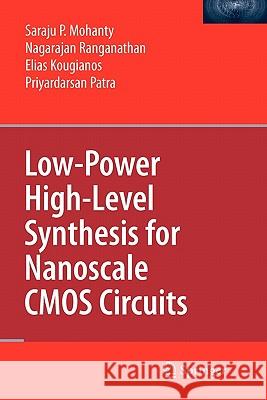
Saraju P. Mohanty Nagarajan Ranganathan Elias Kougianos
Low-Power High-Level Synthesis for Nanoscale CMOS Circuits
addresses the need for analysis, characterization, estimation, and optimization of the various forms of power dissipation in the presence of process variations of nano-CMOS technologies. The authors show very large-scale integration (VLSI) researchers and engineers how to minimize the different types of power consumption of digital circuits. The material deals primarily with high-level (architectural or behavioral) energy dissipation because the behavioral level is not as highly abstracted as the system level nor is it as...
Low-Power High-Level Synthesis for Nanoscale CMOS Circuits
addresses the need for analysis, characterization, estimation, and optimizatio...
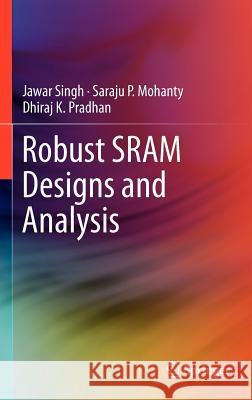
This book provides a guide to Static Random Access Memory (SRAM) bitcell design and analysis to meet the nano-regime challenges for CMOS devices and emerging devices, such as Tunnel FETs. Since process variability is an ongoing challenge in large memory arrays, this book highlights the most popular SRAM bitcell topologies (benchmark circuits) that mitigate variability, along with exhaustive analysis. Experimental simulation setups are also included, which cover nano-regime challenges such as process variation, leakage and NBTI for SRAM design and analysis. Emphasis is placed throughout the...
This book provides a guide to Static Random Access Memory (SRAM) bitcell design and analysis to meet the nano-regime challenges for CMOS devices an...
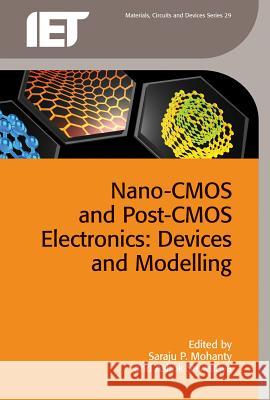
The demand for ever smaller and more portable electronic devices has driven metal oxide semiconductor-based (CMOS) technology to its physical limit with the smallest possible feature sizes. This presents various size-related problems such as high power leakage, low-reliability, and thermal effects, and is a limit on further miniaturization. To enable even smaller electronics, various nano-devices including carbon nanotube transistors, graphene transistors, tunnel transistors and memristors (collectively called post-CMOS devices) are emerging that could replace the traditional and ubiquitous...
The demand for ever smaller and more portable electronic devices has driven metal oxide semiconductor-based (CMOS) technology to its physical limit wi...