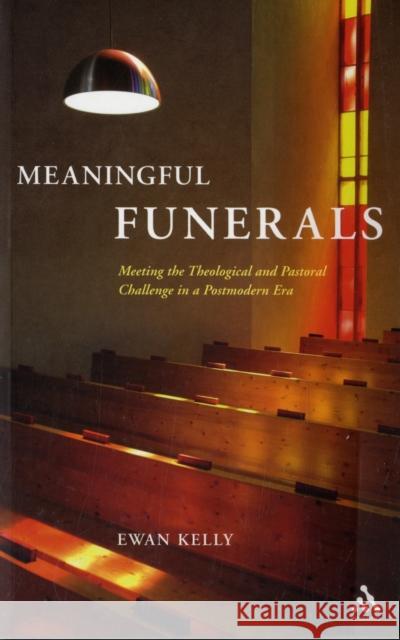
The majority of the British population no longer attend church and, consequently, lack familiarity with the Christian tradition, its stories, language and metaphors. However, when bereaved, many still turn to church representatives, working in parish settings or chaplaincies, to perform funerals for their loved ones. The key issue addressed in this book is how funerals may be created which are not only relevant for the bereaved, but also have theological integrity. A paradigm shift in the manner by which funerals are constructed is proposed - from imposing alien liturgies to creating a...
The majority of the British population no longer attend church and, consequently, lack familiarity with the Christian tradition, its stories, langu...
The greatest asset which people in pastoral care offer to in a caring relationship is themselves or to be more precise the aspects of self which they have reflected upon. Offering oneself to other people in order to provide companionship along the road of life, especially when the particular stage on the journey is one of anticipated or actual loss, is an act which is both challenging and yet potentially life enhancing for a carer. The purpose of this book is to offer an aid to those who seek to understand themselves better with a view to enhancing the quality of spiritual...
The greatest asset which people in pastoral care offer to in a caring relationship is themselves or to be more precise the aspects of self which th...
Explores the role of chaplaincy and the future of spiritual care delivery within contemporary healthcare systems. The focus throughout the book is on questioning current norms: shifting away from the current view of chaplaincy as a crisis intervention strategy, and toward a holistic, person-centred enhancement of quality of life and wellbeing.
Explores the role of chaplaincy and the future of spiritual care delivery within contemporary healthcare systems. The focus throughout the book is on ...