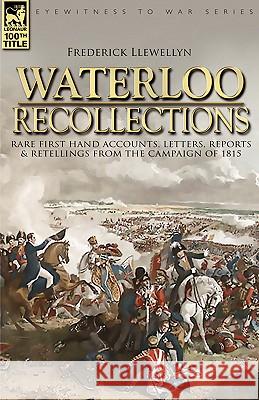
Eighteen accounts of the battles that ended the Napoleonic epoch The Battle of Waterloo is one of the most famous battles -if not the most famous battle-in history. Many books have been written about Waterloo, and many first-hand accounts published, yet it continues to fascinate both students and casual readers alike. In this book, Frederick Llewellyn has gathered together a number of accounts that have hitherto slipped through the net, creating a book the contents of which will be entirely new to most modern readers. Among them: Major Frye has left us with a compelling account from 'behind...
Eighteen accounts of the battles that ended the Napoleonic epoch The Battle of Waterloo is one of the most famous battles -if not the most famous batt...
Eighteen accounts of the battles that ended the Napoleonic epoch The Battle of Waterloo is one of the most famous battles -if not the most famous battle-in history. Many books have been written about Waterloo, and many first-hand accounts published, yet it continues to fascinate both students and casual readers alike. In this book, Frederick Llewellyn has gathered together a number of accounts that have hitherto slipped through the net, creating a book the contents of which will be entirely new to most modern readers. Among them: Major Frye has left us with a compelling account from 'behind...
Eighteen accounts of the battles that ended the Napoleonic epoch The Battle of Waterloo is one of the most famous battles -if not the most famous batt...
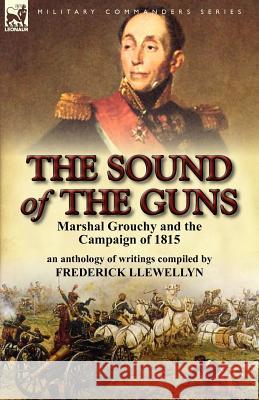
Grouchy and the fall of an empire The phrase, 'he met his Waterloo' has entered the English language and almost everyone knows it means that someone, probably powerful, has fallen; contextually the words have most often been applied to those guilty of hubris in no small measure and therefore by implication it has been a ruin deserved. It is, perhaps, not unfair that the vanquishing of Napoleon, Emperor of the French, should have been the phrase's origin. He was a 'chancer' on a grand scale, much given to vanity and his last bid for power, which propelled him from exile on a small...
Grouchy and the fall of an empire The phrase, 'he met his Waterloo' has entered the English language and almost everyone knows it means that some...
Grouchy and the fall of an empire The phrase, 'he met his Waterloo' has entered the English language and almost everyone knows it means that someone, probably powerful, has fallen; contextually the words have most often been applied to those guilty of hubris in no small measure and therefore by implication it has been a ruin deserved. It is, perhaps, not unfair that the vanquishing of Napoleon, Emperor of the French, should have been the phrase's origin. He was a 'chancer' on a grand scale, much given to vanity and his last bid for power, which propelled him from exile on a small...
Grouchy and the fall of an empire The phrase, 'he met his Waterloo' has entered the English language and almost everyone knows it means that some...