Brigitte Bailey Katheryn P. Viens Conrad Edick Wright
These essays mark the maturation of scholarship on Margaret Fuller (1810-1850), one of the most important public intellectuals of the nineteenth century and a writer whose works have been much revived in recent decades. The authors--leading scholars of Fuller, Transcendentalism, and the antebellum period--consider anew Fuller the critic, the journalist, the reformer, the traveler, and the social and cultural observer, and make fresh contributions to the study of her life and work. Drawing on developments in gender theory, transatlantic studies, and archival excavations of the networks of...
These essays mark the maturation of scholarship on Margaret Fuller (1810-1850), one of the most important public intellectuals of the nineteenth centu...
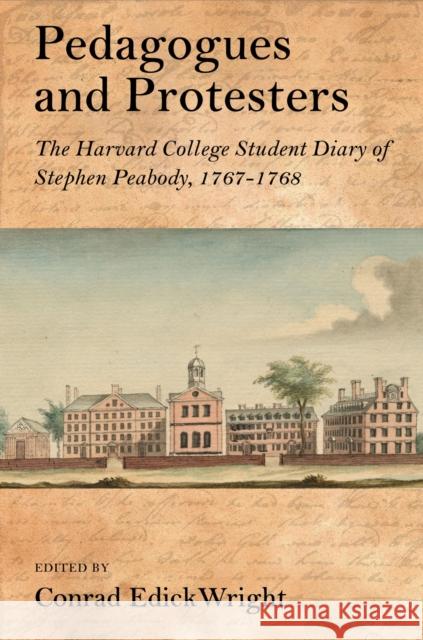
On April 4, 1768, about one hundred angry Harvard College undergraduates, well over half the student body, left school and went home, in protest against new rules about class preparation. Their action constituted the largest student strike at any colonial American college. Many contemporaries found the cause trivial and the students' decision inexplicable, but in the undergraduates' own minds it was the culmination of months of tensions with the faculty.
Pedagogues and Protesters recounts the year in daily journal entries by Stephen Peabody, a member of the class of 1769. The best...
On April 4, 1768, about one hundred angry Harvard College undergraduates, well over half the student body, left school and went home, in protest ag...
Matthew Mason Katheryn P. Viens Conrad Edick Wright
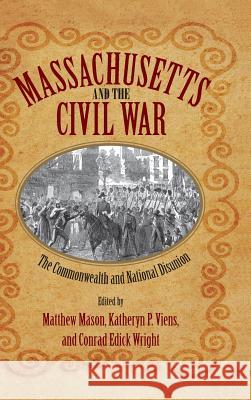
All states are not created equal, at least not when it comes to their influence on American history. That assumption underlies Massachusetts and the Civil War. The volume's ten essays coalesce around the national significance of Massachusetts through the Civil War era, the ways in which the commonwealth reflected and even modeled the Union's precarious but real wartime unification, and the Bay State's postwar return to the schisms that predated the war. Rather than attempting to summarize every aspect of the state's contribution to the wartime Union, the collection focuses on what was...
All states are not created equal, at least not when it comes to their influence on American history. That assumption underlies Massachusetts and th...
Brigitte Bailey Katheryn P. Viens Conrad Edick Wright
These essays mark the maturation of scholarship on Margaret Fuller (1810-1850), one of the most important public intellectuals of the nineteenth century and a writer whose works have been much revived in recent decades. The authors--leading scholars of Fuller, Transcendentalism, and the antebellum period--consider anew Fuller the critic, the journalist, the reformer, the traveler, and the social and cultural observer, and make fresh contributions to the study of her life and work. Drawing on developments in gender theory, transatlantic studies, and archival excavations of the networks of...
These essays mark the maturation of scholarship on Margaret Fuller (1810-1850), one of the most important public intellectuals of the nineteenth centu...
On April 4, 1768, about one hundred angry Harvard College undergraduates, well over half the student body, left school and went home, in protest against new rules about class preparation. Their action constituted the largest student strike at any colonial American college. Many contemporaries found the cause trivial and the students' decision inexplicable, but in the undergraduates' own minds it was the culmination of months of tensions with the faculty.
Pedagogues and Protesters recounts the year in daily journal entries by Stephen Peabody, a member of the class of 1769. The best...
On April 4, 1768, about one hundred angry Harvard College undergraduates, well over half the student body, left school and went home, in protest ag...