Natural law theory is controversial today because it presumes that there is a stable 'human nature' that is subject to a 'law.' How do we know that 'human nature' is stable and not ever-evolving? How can we expect 'law' not to constrict human freedom and potential? Furthermore if there is a 'law, ' there must be a lawgiver. Matthew Levering argues that natural law theory makes sense only within a broader worldview, and that the Bible sketches both such a persuasive worldview and an account of natural law that offers an exciting portrait of the moral life. To establish the relevance of...
Natural law theory is controversial today because it presumes that there is a stable 'human nature' that is subject to a 'law.' How do we know that 'h...
This book inquires as to whether theological dialogue between Christians and Jews is possible, not only in itself but also as regards the emergence of communities of Messianic Judaism. In light of David Novak's insights, Matthew Levering proposes that Christian theological responses to supersessionism need to preserve both the Church's development of doctrine and Rabbinic Judaism's ability to define its own boundaries.
The book undertakes constructive philosophical theology in dialogue with Novak. Exploring the interrelated doctrines of divine providence/theonomy, the image of God,...
This book inquires as to whether theological dialogue between Christians and Jews is possible, not only in itself but also as regards the emergence...
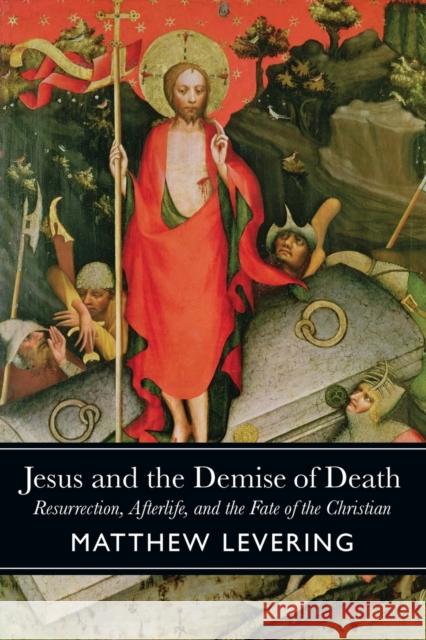
What happens after death to Jesus and to those who follow him? Jesus and the Demise of Death offers a constructive theology that seeks to answer that very question, carefully considering both Jesus' descent into hell and eventual resurrection as integral parts of a robust vision of the Christian bodily resurrection. Taking on the claims of N.T. Wright and Richard B. Hays, Matthew Levering draws strongly upon the work of Thomas Aquinas to propose a radical reconstruction of Christian eschatological theology--one that takes seriously the profound ways in which Christianity and its beatific...
What happens after death to Jesus and to those who follow him? Jesus and the Demise of Death offers a constructive theology that seeks to answer th...
This bookintroduces Catholic doctrine through the crucible of the women mystics'reception of the gospel.The work of thegreat women theologians of the Church's second millennium has too often beenneglected (or relegated to the category of 'mysticism') in textbooks onCatholic doctrine.This is a shame, because their work shows the interior conjunction of liturgical experience(broadly understood), scriptural exegesis, philosophical reflection, anddoctrinal/creedal formulation.Drawingon their work, this book presents the tenets of Catholic faith in a clear andaccessible manner, useful for...
This bookintroduces Catholic doctrine through the crucible of the women mystics'reception of the gospel.The work of thegreat women theologians o...
The writings of John Paul II display contemporary relevence of truths set forth by Aquinas in the thirteenth century. This should not surprise because Aquinas's theology possesses an extraordinary appreciation of biblical revelation and the patristic witness, as well as keen metaphysical penetration. In John Paul II's creative mind, the key insights of Aquinas are extended and developed.
The writings of John Paul II display contemporary relevence of truths set forth by Aquinas in the thirteenth century. This should not surprise because...
This book is an examination of natural law doctrine, rooted in the classical writings of our respective three traditions: Jewish, Christian, and Islamic. Each of the authors provides an extensive essay reflecting on natural law doctrine in his tradition. Each of the authors also provides a thoughtful response to the essays of the other two authors. Readers will gain a sense for how natural law (or cognate terms) resonated with classical thinkers such as Maimonides, Origen, Augustine, al-Ghazali and numerous others. Readers will also be instructed in how the authors think that these sources...
This book is an examination of natural law doctrine, rooted in the classical writings of our respective three traditions: Jewish, Christian, and Islam...
Aquinas's commentaries on St. Paul are well known and have received significant attention in the past few years. It is widely known, too, that Aquinas quotes Paul often in the Summa Theologiae. This aspect of the Summa, however, has not been studied in detail. This book seeks to fill that lacuna in scholarship.
The book's brief introduction treats Aquinas as a biblically erudite theologian, and offers some basic statistical data regarding his use of Paul in the Summa Theologiae. The book's nine chapters track in detail Aquinas's use of Pauline quotations in his theological...
Aquinas's commentaries on St. Paul are well known and have received significant attention in the past few years. It is widely known, too, that Aquinas...
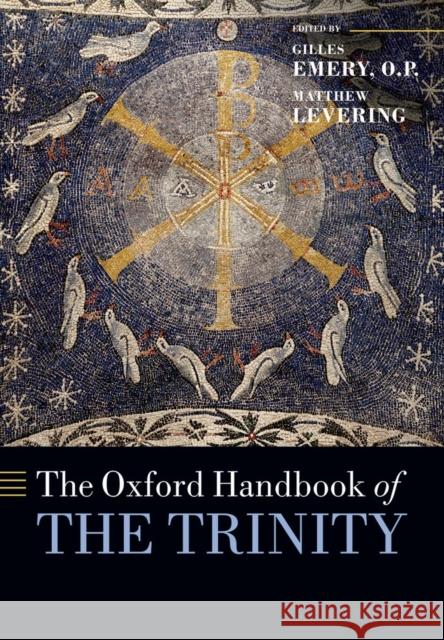
This handbook examines the history of Trinitarian theology and reveals the Nicene unity still at work among Christians today despite ecumenical differences and the variety of theological perspectives. The forty-three chapters are organized into the following seven parts: the Trinity in Scripture, Patristic witnesses to the Trinitarian faith, Medieval appropriations of the Trinitarian faith, the Reformation through to the 20th Century, Trinitarian Dogmatics, the Trinity and Christian life, and Dialogues (addressing ecumenical, interreligious, and cultural interactions). The phrase...
This handbook examines the history of Trinitarian theology and reveals the Nicene unity still at work among Christians today despite ecumenical differ...