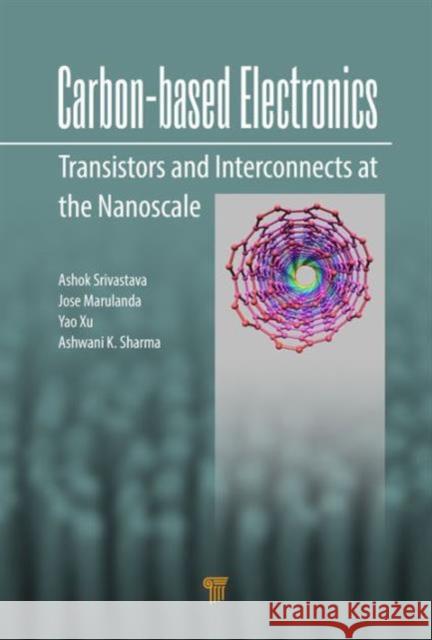
The demand for ever smaller and more portable electronic devices has driven metal oxide semiconductor-based (CMOS) technology to its physical limit with the smallest possible feature sizes. This presents various size-related problems such as high power leakage, low-reliability, and thermal effects, and is a limit on further miniaturization. To enable even smaller electronics, various nano-devices including carbon nanotube transistors, graphene transistors, tunnel transistors and memristors (collectively called post-CMOS devices) are emerging that could replace the traditional and ubiquitous...
The demand for ever smaller and more portable electronic devices has driven metal oxide semiconductor-based (CMOS) technology to its physical limit wi...
Discovery of one-dimensional material carbon nanotubes in 1991 by the Japanese physicist Dr. Sumio Iijima has resulted in voluminous research in the field of carbon nanotubes for numerous applications, including possible replacement of silicon used in the fabrication of CMOS chips. One interesting feature of carbon nanotubes is that these can be metallic or semiconducting with a bandgap depending on their diameter. In search of non-classical devices and related technologies, both carbon nanotube-based field-effect transistors and metallic carbon nanotube interconnects are being explored...
Discovery of one-dimensional material carbon nanotubes in 1991 by the Japanese physicist Dr. Sumio Iijima has resulted in voluminous research in th...