This ambitious work is a multimedia, interdisciplinary study of Chinese modernity in the context of globalization from the late nineteenth century to the present. Sheldon Lu draws on Chinese literature, film, art, photography, and video to broadly map the emergence of modern China in relation to the capitalist world-system in the economic, social, and political realms. Central to his study is the investigation of biopower and body politics, namely, the experience of globalization on a personal level.
Lu first outlines the trajectory of the body in modern Chinese literature by...
This ambitious work is a multimedia, interdisciplinary study of Chinese modernity in the context of globalization from the late nineteenth century ...
This ambitious work is a multimedia, interdisciplinary study of Chinese modernity in the context of globalization from the late nineteenth century to the present. Sheldon Lu draws on Chinese literature, film, art, photography, and video to broadly map the emergence of modern China in relation to the capitalist world-system in the economic, social, and political realms. Central to his study is the investigation of biopower and body politics, namely, the experience of globalization on a personal level.
Lu first outlines the trajectory of the body in modern Chinese literature by...
This ambitious work is a multimedia, interdisciplinary study of Chinese modernity in the context of globalization from the late nineteenth century ...
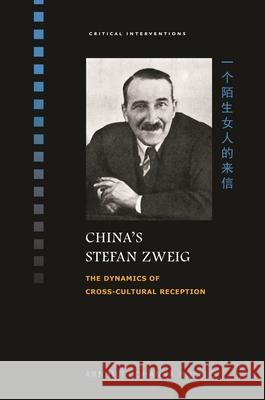
During his lifetime Austrian novelist Stefan Zweig (1881-1942) was among the most widely read German-language writers in the world. Always controversial, he fell into critical disfavor as writers and critics in a devastated postwar Europe attacked the poor literary quality of his works and excoriated his apolitical fiction as naive Habsburg nostalgia. Yet in other parts of the world, Zweig's works have enjoyed continued admiration and popularity, even canonical status.
China's Stefan Zweig unveils the extraordinary success of Zweig's novellas in China, where he has been read in an...
During his lifetime Austrian novelist Stefan Zweig (1881-1942) was among the most widely read German-language writers in the world. Always controve...
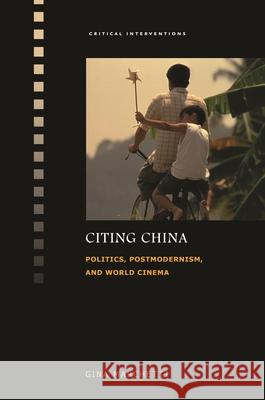
Citing China explores the role film plays in creating a common ground for the exchange of political and aesthetic ideas between China and the rest of the world. It does so by examining the depiction of China in contemporary film, looking at how global filmmakers "cite" China on screen. Author Gina Marchetti's aim is not to point to how China continues to function as a metaphor or allusion that has little to do with the geopolitical actualities of contemporary China. Rather, she highlights China's position within global film culture, examining how cinematic quotations link current films to...
Citing China explores the role film plays in creating a common ground for the exchange of political and aesthetic ideas between China and the rest ...