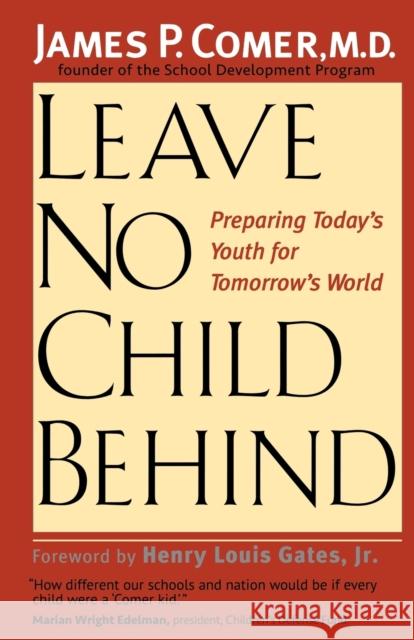
The call-to-arms to "leave no child behind" in America has become popularly associated with the Bush administration's education plan--a plan that actually diverges greatly from the ideals of the Children's Defense Fund, which originated the concept. Here, in a bold and engaging new book, Dr. James Comer reclaims this now-famous exhortation as a tool for positive and substantive change. Far removed from the federal government's focus on standardized testing as the panacea for our educational ills, Dr. Comer's argument--drawn from his own experiences as the creator of the School...
The call-to-arms to "leave no child behind" in America has become popularly associated with the Bush administration's education plan--a plan that a...
Halperin Frederick Douglass Henry Louis, Jr. Gates
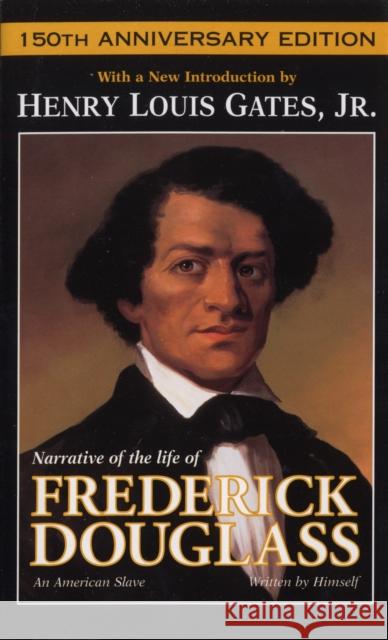
Born a slave in Maryland circa 1817, Frederick Douglass went on to become the most influential and distinguished African American of the nineteenth century. As an abolitionist, newspaper publisher, orator and statesman, Douglass dedicated his life to the triumph of freedom over oppression for all black Americans.
Published shortly after his escape from slavery, "The Narrative of the Life of Frederick Douglass, An American Slave became an immediate bestseller in 1845 and is still the most widely read slave narrative in American history. A piercing denounciation of slavery, the...
Born a slave in Maryland circa 1817, Frederick Douglass went on to become the most influential and distinguished African American of the nineteenth ce...
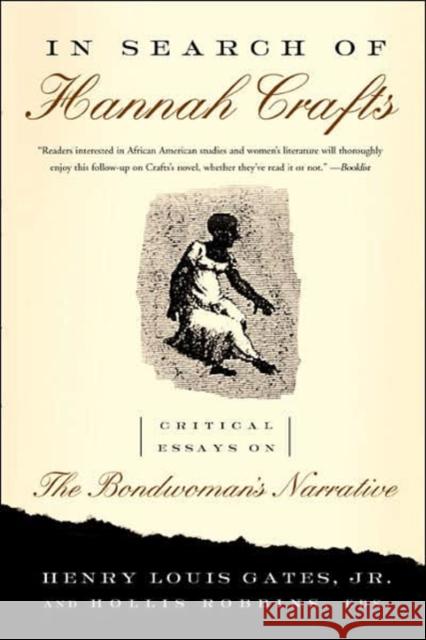
Three years ago, Henry Louis Gates, Jr. discovered an unpublished manuscript, The Bondwoman's Narrative, By Hannah Crafts, A Fugitive Recently Escaped From North Carolina, which turned out to be the first novel by a female African-American slave ever found, and possibly the first novel written by a black women anywhere. The Bondwoman's Narrative was published in 2002. In Search of Hannah Crafts now brings together twenty-two authorities on African-American studies to examine such issues as authenticity, and the history and criticism of this unique novel, including Nina Baym, Jean Fagan...
Three years ago, Henry Louis Gates, Jr. discovered an unpublished manuscript, The Bondwoman's Narrative, By Hannah Crafts, A Fugitive Recently Escaped...
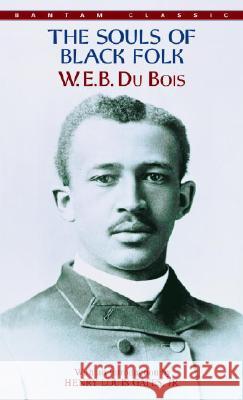
-The problem of the twentieth century is the problem of the color line.- Thus speaks W.E.B. Du Bois in The Souls Of Black Folk, one of the most prophetic and influental works in American literature. In this eloquent collection of essays, first published in 1903, Du Bois dares as no one has before to describe the magnitude of American racism and demand an end to it. He draws on his own life for illustration, from his early experiences teaching in the hills of Tennessee to the death of his infant son and his historic break with the conciliatory position of Booker T. Washington. Far...
-The problem of the twentieth century is the problem of the color line.- Thus speaks W.E.B. Du Bois in The Souls Of Black Folk, one of the most...
First published anonymously in 1912, this resolutely unsentimental novel gave many white readers their first glimpse of the double standard -- and double consciousness -- that ruled the lives of black people in modern America. Republished in 1927, at the height of the Harlem Renaissance, with an introduction by Carl Van Vechten, The Autobiography of an Ex-Coloured Man became a groundbreaking document of Afro-American culture; the first first-person novel ever written by a black, it became an eloquent model for later novelists ranging from Zora Neale Hurston to Richard Wright and Ralph...
First published anonymously in 1912, this resolutely unsentimental novel gave many white readers their first glimpse of the double standard -- and dou...
Almost one-hundred years ago, W.E.B. Du Bois proposed the notion of the "talented tenth," an African American elite that would serve as leaders and models for the larger black community. In this unprecedented collaboration, Henry Louis Gates, Jr., and Cornel West--two of Du Bois's most prominent intellectual descendants--reassess that relationship and its implications for the future of black Americans. If the 1990s are the best of times for the heirs of the Talented Tenth, they are unquestionably worse for the growing black underclass. As they examine the origins of this widening gulf and...
Almost one-hundred years ago, W.E.B. Du Bois proposed the notion of the "talented tenth," an African American elite that would serve as leaders and mo...
"This is a book of stories," writes Henry Louis Gates, "and all might be described as 'narratives of ascent.'" As some remarkable men talk about their lives, many perspectives on race and gender emerge. For the notion of the unitary black man, Gates argues, is as imaginary as the creature that the poet Wallace Stevens conjured in his poem "Thirteen Ways of Looking at a Blackbird." James Baldwin, Colin Powell, Harry Belafonte, Bill T. Jones, Louis Farrakhan, Anatole Broyard, Albert Murray -- all these men came from modest circumstances and all achieved preeminence. They are people, Gates...
"This is a book of stories," writes Henry Louis Gates, "and all might be described as 'narratives of ascent.'" As some remarkable men talk about their...
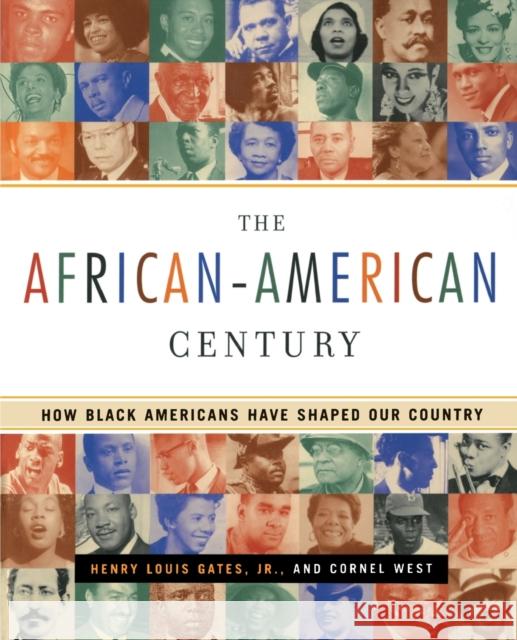
One hundred original profiles of the most influential African-Americans of the twentieth century. Without Louis Armstrong or Miles Davis, we would not have jazz. Without Toni Morrison or Ralph Ellison, we would miss some of our greatest novels. Without Dr. King or Thurgood Marshall, we would be deprived of political breakthroughs that affirm and strengthen our democracy. Here, two of the leading African-American scholars of our day, Henry Louis Gates, Jr., and Cornel West, show us why the twentieth century was the African-American century, as they offer their personal picks of the...
One hundred original profiles of the most influential African-Americans of the twentieth century. Without Louis Armstrong or Miles Davis, we would...
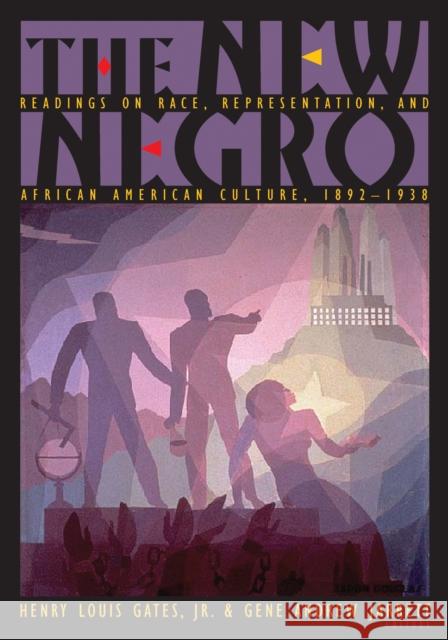
When African American intellectuals announced the birth of the "New Negro" around the turn of the twentieth century, they were attempting through a bold act of renaming to change the way blacks were depicted and perceived in America. By challenging stereotypes of the Old Negro, and declaring that the New Negro was capable of high achievement, black writers tried to revolutionize how whites viewed blacks--and how blacks viewed themselves. Nothing less than a strategy to re-create the public face of "the race," the New Negro became a dominant figure of racial uplift between Reconstruction...
When African American intellectuals announced the birth of the "New Negro" around the turn of the twentieth century, they were attempting through a...