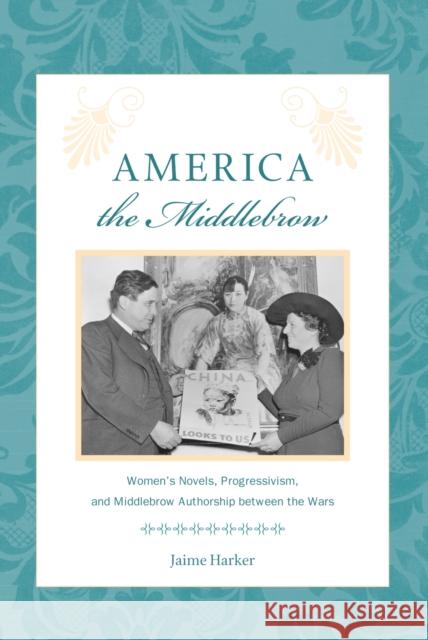
Between the two world wars, American publishing entered a "golden age" characterized by an explosion of new publishers, authors, audiences, distribution strategies, and marketing techniques. The period was distinguished by a diverse literary culture, ranging from modern cultural rebels to working-class laborers, political radicals, and progressive housewives. In America the Middlebrow, Jaime Harker focuses on one neglected mode of authorship in the interwar period -- women's middlebrow authorship and its intersection with progressive politics.
With the rise of middlebrow institutions...
Between the two world wars, American publishing entered a "golden age" characterized by an explosion of new publishers, authors, audiences, distrib...
The Oprah Affect explores the cultural impact of Oprah's Book Club, particularly in light of debates about the definition and purpose of literature in American culture. For the critics collected here, Oprah's Book Club stands, in the context of American literary history, not as an egregious undermining of who we are and what we represent, as some have maintained, but as the latest manifestation of a tradition that encourages symbiotic relationships between readers and texts. Powered by women writers and readers, novels in this tradition attract crowds, sell well, and make unabashed appeals to...
The Oprah Affect explores the cultural impact of Oprah's Book Club, particularly in light of debates about the definition and purpose of literature in...
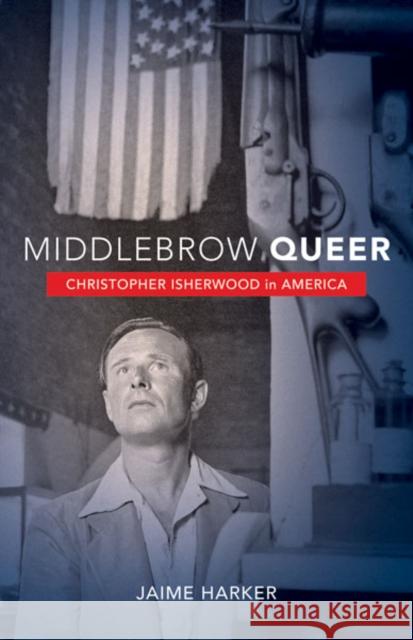
How could one write about gay life for the mainstream public in Cold War America? Many midcentury gay American writers, hampered by external and internal censors, never managed to do it. But Christopher Isherwood did, and what makes his accomplishment more remarkable is that while he was negotiating his identity as a gay writer, he was reinventing himself as an American one. Jaime Harker shows that Isherwood refashioned himself as an American writer following his emigration from England by immersing himself in the gay reading, writing, and publishing communities in Cold War...
How could one write about gay life for the mainstream public in Cold War America? Many midcentury gay American writers, hampered by external an...
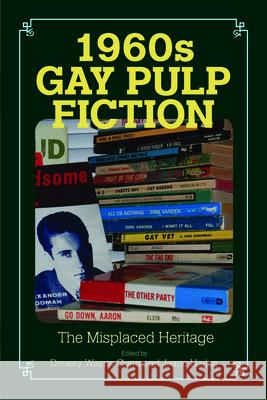
As a result of a series of court cases, by the mid-1960s the U.S. post office could no longer interdict books that contained homosexuality. Gay writers were eager to take advantage of this new freedom, but the only houses poised to capitalize on the outpouring of manuscripts were "adult" paperback publishers who marketed their products with salacious covers. Gay critics, unlike their lesbian counterparts, have for the most part declined to take these works seriously, even though they cover an enormous range of genres: adventures, blue-collar and gray-flannel novels, coming-out stories,...
As a result of a series of court cases, by the mid-1960s the U.S. post office could no longer interdict books that contained homosexuality. Gay wri...
The Women's Liberation Movement held a foundational belief in the written word's power to incite social change. In this new collection, Jaime Harker and Cecilia Konchar Farr curate essays that reveal how second-wave feminists embraced this potential with a vengeance. The authors in This Book Is an Action investigate the dynamic print culture that emerged as the feminist movement reawakened in the late 1960s. The works created by women shined a light on taboo topics and offered inspiring accounts of personal transformation. Yet, as the essayists reveal, the texts represented something far...
The Women's Liberation Movement held a foundational belief in the written word's power to incite social change. In this new collection, Jaime Harker a...
The Women's Liberation Movement held a foundational belief in the written word's power to incite social change. In this new collection, Jaime Harker and Cecilia Konchar Farr curate essays that reveal how second-wave feminists embraced this potential with a vengeance. The authors in This Book Is an Action investigate the dynamic print culture that emerged as the feminist movement reawakened in the late 1960s. The works created by women shined a light on taboo topics and offered inspiring accounts of personal transformation. Yet, as the essayists reveal, the texts represented something far...
The Women's Liberation Movement held a foundational belief in the written word's power to incite social change. In this new collection, Jaime Harker a...
Greg Barnhisel, John N. Duvall, Kristin Fujie, Sarah E. Gardner, Jaime Harker, Kristi Rowan Humphreys, Robert Jackson, Mary A. Knighton, Jennifer Nolan, Carl Rollyson, Tim A. Ryan, Jay Satterfield, Erin A. Smith, and Yung-Hsing Wu
William Faulkner's first ventures into print culture began far from the world of highbrow New York publishing houses such as Boni & Liveright or Random House and little magazines such as the Double Dealer. With that diverse publishing history in mind, this collection explores Faulkner's multifaceted engagements, as writer and...
With contributions by:
Greg Barnhisel, John N. Duvall, Kristin Fujie, Sarah E. Gardner, Jaime Harker, Kristi Rowan Humphreys, Robert Jackson, Ma...