Immediately after 1989, newly emerging polities in Eastern Europe had to contend with an overbearing and dominant legacy: the Soviet model of the state. At that time, the strength of the state looked like a massive obstacle to change; less than a decade later, the state's dominant characteristic was no longer its overweening powerfulness, but rather its utter decrepitude. Consequently, the role of the central state in managing economies, providing social services, and maintaining infrastructure came into question. Focusing on his native Bulgaria, Venelin I. Ganev explores in fine-grained...
Immediately after 1989, newly emerging polities in Eastern Europe had to contend with an overbearing and dominant legacy: the Soviet model of the s...
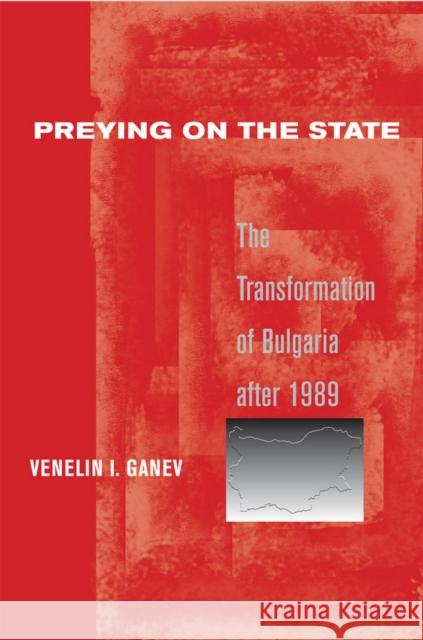
Immediately after 1989, newly emerging polities in Eastern Europe had to contend with an overbearing and dominant legacy: the Soviet model of the state. At that time, the strength of the state looked like a massive obstacle to change; less than a decade later, the state's dominant characteristic was no longer its overweening powerfulness, but rather its utter decrepitude. Consequently, the role of the central state in managing economies, providing social services, and maintaining infrastructure came into question. Focusing on his native Bulgaria, Venelin I. Ganev explores in fine-grained...
Immediately after 1989, newly emerging polities in Eastern Europe had to contend with an overbearing and dominant legacy: the Soviet model of the s...