The Third Conference on the Law of the Sea marked a watershed in the emergence of African diplomatic and legal activities within the international system. Analysis of those states' participation therefore not only provides a template for the study of bloc activity at this level; it also adds the comprehensive analysis of African participation at UNCLOS III and, finally, it should also reveal the means by which states can more effectively impact global political and legislative processes. This study evaluates the extent to which the Exclusive Economic Zone (EEZ) concept represents an...
The Third Conference on the Law of the Sea marked a watershed in the emergence of African diplomatic and legal activities within the international sys...
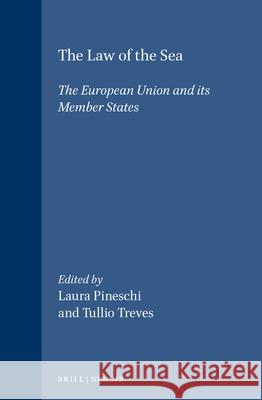
The United Nations Convention on the Law of the Sea of 10 December 1982 entered into force on 16 November 1994. Since this date a single binding instrument has regulated the rights and duties of States at sea and regarding the sea. New concepts, such as the exclusive economic zone, archipelagic waters, transit passage through straits, and the International Seabed Area, are now fully recognized. The fifteen member States of the European Union are a significant sample for analyzing the practice of States, or at least that of the Western industrialized States, as regards the law of the sea....
The United Nations Convention on the Law of the Sea of 10 December 1982 entered into force on 16 November 1994. Since this date a single binding instr...
Until recently, the international community failed to adopt either an agreed limit for the breadth of the territorial sea or a satisfactory regime of fisheries in the waters adjacent to the territorial sea. This provoked an eruption of unilateral acts by which coastal states extended their jurisdiction towards the high seas. The Third U.N. Conference on the Law of the Sea accepted the establishment of a 12-mile territorial sea and a 200-mile exclusive economic zone. While taking into account the non-existent rights and interests of the so-called geographically disadvantaged states and of...
Until recently, the international community failed to adopt either an agreed limit for the breadth of the territorial sea or a satisfactory regime of ...
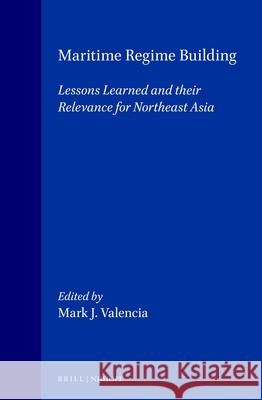
The past few decades have witnessed the emergence of a vast array of regional arrangements and institutions dealing with all aspects of ocean management. The level of cooperation ranges from minimal dispute avoidance to relatively comprehensive ocean governance at the regional level. As concrete examples, reasonably successful and comprehensive regional regimes have been created for the Baltic, the North, and the Mediterranean Seas and the South Pacific. And attempts at regional regime building are ongoing in Southeast Asia, the South China Sea and the Indian Ocean. Although there are broad...
The past few decades have witnessed the emergence of a vast array of regional arrangements and institutions dealing with all aspects of ocean manageme...
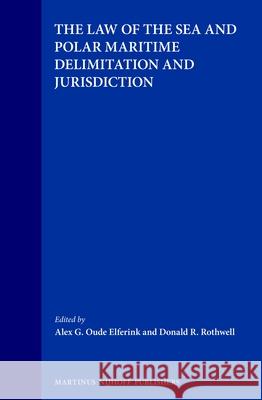
The climate and other characteristics of the polar regions have been major factors in shaping the legal regime applicable to the polar oceans. In Antarctica, states have had to grapple with the question of how to account for developments in the law of the sea, while preserving the compromise over sovereignty contained in the Antarctic Treaty. The Arctic also has presented challenges for the law of the sea, as illustrated by the continued attention given to special rules for polar shipping. The 1982 United Nations Convention on the Law of the Sea has led to substantial agreement on the legal...
The climate and other characteristics of the polar regions have been major factors in shaping the legal regime applicable to the polar oceans. In Anta...
A comprehensive study of transfer of technology for deep sea-bed mining under the 1982 Law of the Sea Convention and the controversies that have arisen about it. The book also discusses transfer of technology in international law in general and examines developments since the adoption of the 1982 Convention. These include national mining legislations of industrialized countries, extensive work by the Preparatory Commission for the establishment of the International Sea-Bed Authority and the International Tribunal for the Law of the Sea, and the new compromise Agreement relating to the deep...
A comprehensive study of transfer of technology for deep sea-bed mining under the 1982 Law of the Sea Convention and the controversies that have arise...
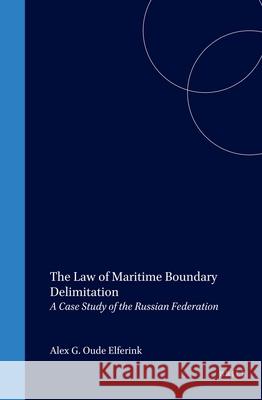
This volume presents an analysis of the maritime boundary delimitations of the Russian Federation. The focus of this analysis is the relationship between state practice and the rules of public international law applicable to the delimitation of maritime zones between neighboring states. A first part establishes the contents of the law in this field. The main part of the work concerns an analysis of the position of the Russian Federation on the rules of maritime delimitation law and the practice of this state in relation to the delimitation of specific maritime boundaries with neighboring...
This volume presents an analysis of the maritime boundary delimitations of the Russian Federation. The focus of this analysis is the relationship betw...