Almost twenty-five years after publishing Planning and Organizing the Postwar Air Force, 1943-1947, and a decade after publishing his definitive work, The Struggle for Air Force Independence, 1943-1947, Herman S. Wolk, retired Air Force senior historian, returns to the subject that capped his nearly fifty-year career with the Air Force history program. As Wolk explains, this brief work is a reflective analysis. The United States Army's air arm waged a frustrating and uncertain battle during the interwar years to gain greater autonomy from the War Department. For the air arm, the key...
Almost twenty-five years after publishing Planning and Organizing the Postwar Air Force, 1943-1947, and a decade after publishing his definitive work,...
Early on the morning of January 17, 1991, the Persian Gulf War began. It consisted of massive allied air strikes on Iraq and Iraqi targets in Kuwait. The United States Air Force spearheaded the air offensive and furnished the bulk of the attacking aircraft. During forty-two days of fighting, the U.S. Air Force simultaneously conducted two closely coordinated air campaigns: one in support of allied ground forces; the other, attacking strategic targets. Planners of the strategic air campaign sought to isolate and incapacitate Saddam Hussein's government; gain and maintain air supremacy to...
Early on the morning of January 17, 1991, the Persian Gulf War began. It consisted of massive allied air strikes on Iraq and Iraqi targets in Kuwait. ...
This study surveys the changes in the size and functions of Headquarters United States Air Force (USAF) since its inception in September 1947. It examines both the external and internal factors that influenced the Headquarters USAF organization. Additionally, it surveys and evaluates the many reorganizations that were implemented over time. Divided into three sections. this study begins with a consideration of the external influences that have shaped the Headquarters USAF organization. The second section addresses Air Force internal changes. The third section considers the statistical jumble...
This study surveys the changes in the size and functions of Headquarters United States Air Force (USAF) since its inception in September 1947. It exam...
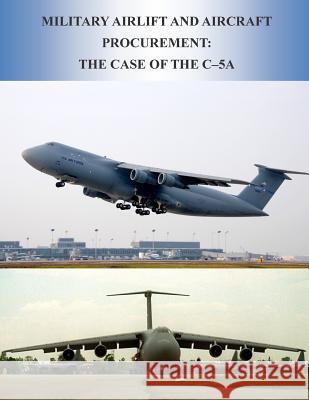
This is the second in a series of research studies-historical works that were not published for various reasons. Yet, the material contained therein was deemed to be of enduring value to Air Force members and scholars. These works were minimally edited and printed in a limited edition to reach a small audience that may find them useful. We invite readers to provide feedback to the Air Force History and Museums Program. Dr. Theodore Joseph Crackel, completed this history in 1993, under contract to the Military Airlift Command History Office. Contract management was under the purview of the...
This is the second in a series of research studies-historical works that were not published for various reasons. Yet, the material contained therein w...
This is the third in a series of research studies-historical works that were not published for various reasons. Yet, the material contained therein was deemed to be of enduring value to Air Force members and scholars. These were minimally edited and printed in a limited edition to reach a small audience that may find them useful. We invite readers to provide feedback to the Air Force History and Museums Program. The author, Marcelle S. Knaack, a member of the Office of Air Force History, undertook the research and writing of this book as a consultant, after she retired. Tragically, she passed...
This is the third in a series of research studies-historical works that were not published for various reasons. Yet, the material contained therein wa...
Tactical airlift matured in Vietnam. American airlift personnel worked with the French prior to their pull-out in the mid-1950s, and started assisting South Vietnamese in the years just prior to the massive American involvement. Tactics were developed, and then changed constantly in an effort to adapt to current military situations. Sometimes the old procedures did not apply. For example, the dropping of paratroops, long a staple of tactical airlift, was only marginally successful and in 1966 was largely abandoned in favor of helicopter-borne assault forces. But the early involvement in...
Tactical airlift matured in Vietnam. American airlift personnel worked with the French prior to their pull-out in the mid-1950s, and started assisting...
Tactical airlift matured in Vietnam. American airlift personnel worked with the French prior to their pull-out in the mid-1950s, and started assisting South Vietnamese in the years just prior to the massive American involvement. Tactics were developed, and then changed constantly in an effort to adapt to current military situations. Sometimes the old procedures did not apply. For example, the dropping of paratroops, long a staple of tactical airlift, was only marginally successful and in 1966 was largely abandoned in favor of helicopter-borne assault forces. But the early involvement in...
Tactical airlift matured in Vietnam. American airlift personnel worked with the French prior to their pull-out in the mid-1950s, and started assisting...
THIS slender volume has value for both the general reader and the aviation specialist. For the latter there are lessons regarding command and control and combined-unit operations that need to be learned to achieve battlefield success. For the former there is a straightforward narrative about American aviators of all four services struggling in the most difficult of conditions to try to rescue more than 1,500 American and Vietnamese military and civilians. Not all the Americans moving through the events recounted in this monograph acted heroically, but most did, and it was their heroism that...
THIS slender volume has value for both the general reader and the aviation specialist. For the latter there are lessons regarding command and control ...
One of the major lessons of World War II was the need for the military services, both in the United States and elsewhere, to work together in mutually supporting ways to defeat an enemy. Changing technology and the worldwide character of the war altered the traditional boundaries between land and sea warfare, and the new elements of air power and atomic weapons even further called into question the traditional roles and missions of the armed services. In 1947, the U.S. Air Force became independent of the Army and a National Military Establishment (which became the Department of Defense in...
One of the major lessons of World War II was the need for the military services, both in the United States and elsewhere, to work together in mutually...
Professor Stephen B. Johnson demonstrates in fine detail how the application of systems management by the United States Air Force to its ballistic missiles and computer programs not only produced critical new weapons, but also benefited American industry. Systems management harmonized the disparate goals of four interest groups. For the military it brought rapid technological progress; for scientists, new products; for engineers, dependability; and for managers, predictable cost. The process evolved, beginning shortly after the end of World War II, when Gen. Henry H. "Hap" Arnold directed...
Professor Stephen B. Johnson demonstrates in fine detail how the application of systems management by the United States Air Force to its ballistic mis...