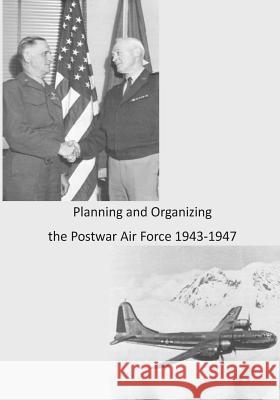
One of the longest and most bitter disputes in twentieth century military affairs has been over the organization of the armed forces, particularly the question of independence for the air forces. From the early period of powered flight apostles of air power, such as the Italian General GuilioDouhet, argued that the proper employment of aviation in war required the massing of air armadas independent of ground or naval forces. As it developed in the United States in the 1920s and 1930s, the dispute was not simply self-serving or bureaucratic-for power or prestige, rank or budget. The argument...
One of the longest and most bitter disputes in twentieth century military affairs has been over the organization of the armed forces, particularly the...
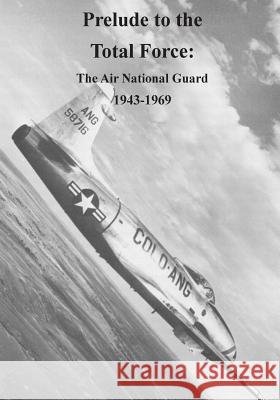
In this study of the origins and evolution of the Air National Guard, Dr. Charles. Gross, himself a former guardsman and a professional historian, currently at the Air Force Systems Command History Office, chronicles this transformation. In the 1940s, the active duty Air Force was not particularly sympathetic or supportive of an Air National Guard. Focused on creating an Air Force as a separate service, carving out its role in the air-atomic age, and changing from piston to jet engines in an austere budgetary environment, the regulars saw no real purpose for part-time, state air forces. If...
In this study of the origins and evolution of the Air National Guard, Dr. Charles. Gross, himself a former guardsman and a professional historian, cur...
Since the days of ancient warfare, commanders have relied on science and technology for success in war. Their use in military affairs increased dramatically after the Scientific and Industrial Revolutions, particularly in the nineteenth century. For example, chemists and metallurgists contributed greatly to World War I, while World War II is sometimes referred to as the physicists' war. During the fifty-year conflict known as the Cold War, scientists from diverse disciplines collaborated to multiply the effectiveness of military force and meet national security needs. Of all the federal...
Since the days of ancient warfare, commanders have relied on science and technology for success in war. Their use in military affairs increased dramat...
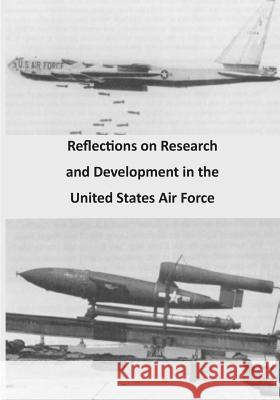
Reflections on Research and Development in the United States Air Force was intended to be part of the now-defunct Warrior Series. While the necessity for that particular series has lapsed, its long-term goal remains valid-to produce books which will appeal to all levels of Air Force people, who may learn from the past and perhaps apply the experiences of past generations to the present. This publication should interest readers who have scant familiarity with research and development, as well as those intimately familiar with the subject. The former will gain an understanding of the outline...
Reflections on Research and Development in the United States Air Force was intended to be part of the now-defunct Warrior Series. While the necessity ...
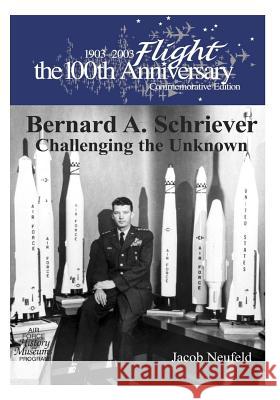
When, on June 5, 1998, Falcon Air Force Base, ten miles east of Colorado Springs, Colorado, was renamed in honor of General Bernard A. Schriever, USAF (Ret.), it marked a singular event. Normally, such an honor is bestowed posthumously, but in this case, the renaming ceremony proved the exception. Although World War II had sparked an effusion of scientific and technical developments, among them radar, electronic warfare, jet engines, air-to-air and air-to-ground missiles, and data-processing technology, the two innovations of unprecedented character that had the greatest affect on the Air...
When, on June 5, 1998, Falcon Air Force Base, ten miles east of Colorado Springs, Colorado, was renamed in honor of General Bernard A. Schriever, USAF...
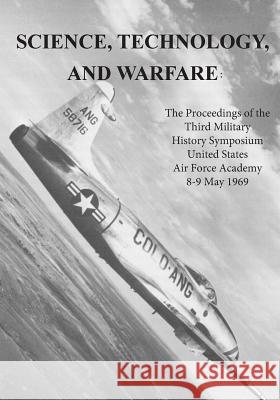
The theme of the first Military History Symposium, held at the United States Air Force Academy on 4-5 May 1967, was "Current Concepts in Military History." The papers delivered at the second, on 2-3 May 1968, together with the subsequent comments of a number of officers who had participated in the events discussed, were published by the Academy in 1969 as Command and Commanders in Modern Warfare. The present volume consists of the papers, revised and annotated for publication, and the discussion sessions of the third Symposium, held on 8-9 May 1969. With the fourth Symposium, "Soldiers and...
The theme of the first Military History Symposium, held at the United States Air Force Academy on 4-5 May 1967, was "Current Concepts in Military Hist...
Search and rescue has always been important to the United States Air Force, whose aircrews deserve nothing less than the fullest possible commitment to save them and return them home. The motto of Air Force search and rescue, "So Others May Live," is one of the most compelling of all military mottoes. It embodies this spirit of altruism and, as events have proven, also indicates the service's intention to furnish life-saving SAR for civilian as well as military purposes. Search and rescue flourished during World War II as lifeguard ships and submarines joined patrolling aircraft in saving...
Search and rescue has always been important to the United States Air Force, whose aircrews deserve nothing less than the fullest possible commitment t...
Race relations between white and black Americans in the Army Air Forces (AAF) during World War II ran the gamut from harmonious to hostile, depending upon the unique circumstances existing within each unit, command, and theater. In analyzing racial policy as it was implemented throughout the chain of command, are a number of themes relevant for an understanding of the utilization of African Americans during the war. First, the AAF never willingly accepted black soldiers. This service had totally excluded them for over two decades before they were permitted to enter, and then used them only...
Race relations between white and black Americans in the Army Air Forces (AAF) during World War II ran the gamut from harmonious to hostile, depending ...
The U.S. Air Force's development of aerial refueling cannot be attributed to any one person, but among all of those involved, General Curtis E. LeMay remains an outstanding figure. During his nine years as SAC commander, LeMay built the U.S. aerial refueling capability into what was practically an air force unto itself, an "invisible" foundation for the nation's original nuclear deterrent. With only a bit of exaggeration, it can be said that the KC- 135 was his airplane. When LeMay retired as Air Force Chief of Staff on February 1, 1965, Boeing already had delivered its 732d and last KC-135...
The U.S. Air Force's development of aerial refueling cannot be attributed to any one person, but among all of those involved, General Curtis E. LeMay ...
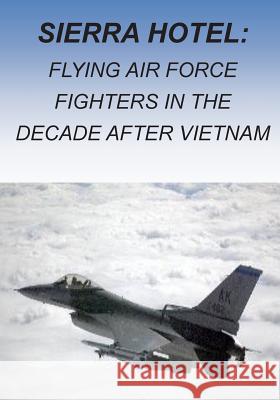
Those old enough to remember the decade after Vietnam will recall those years as exciting but difficult ones to be a fighter pilot. Struggling to come to terms with poor performance by U.S. forces in Vietnam, we seemed to have the wrong jets, unreliable weapons, and inadequate training. On top of this we faced the specter of the next war coming in Europe against the Warsaw Pact, which outnumbered us two to one. We called the Soviet and Soviet-trained pilots Ivan, and sometimes Ivan seemed ten feet tall. We should have had an edge with our force of combat veterans. However, within five years...
Those old enough to remember the decade after Vietnam will recall those years as exciting but difficult ones to be a fighter pilot. Struggling to come...