This new book argues that sovereignty, generally defined as the supreme authority in a political community, has a neglected democratic dimension that highlights the expansion of substantive individual rights and freedoms at home and abroad.
Offering an historically based assessment of sovereignty that neither reifies the state nor argues sovereignty and the state are eroding under globalizing processes, the book maintains that sovereignty norms have continually changed throughout the history of the sovereign state. Matthew Weinert links international legal developments that restrict...
This new book argues that sovereignty, generally defined as the supreme authority in a political community, has a neglected democratic dimension th...
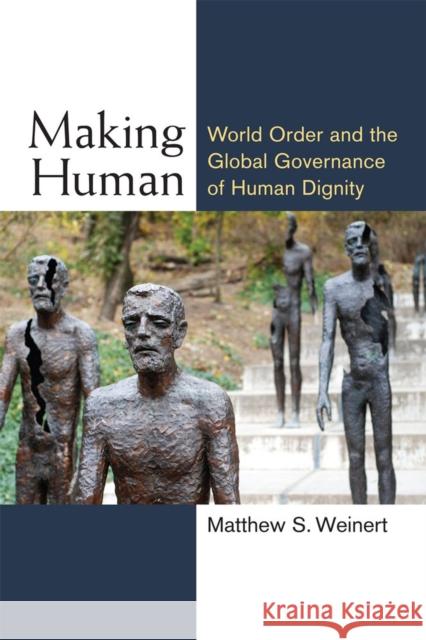
Differences between human beings have long been used to justify a range of degrading, exclusionary, and murderous practices that strip people of their humanity and dignity. While considerable scholarship has been devoted to such dehumanization, Matthew S. Weinert asks how we might conceive its reverse--humanization, or what it means to "make human." Weinert proposes an account of making human centered on five mechanisms: reflection, recognition, resistance, replication of dominant mores, and responsibility. Examining cases such as the UN Security Council's engagements with crises and the...
Differences between human beings have long been used to justify a range of degrading, exclusionary, and murderous practices that strip people of their...