Wild crop relatives are now playing a significant part in the elucidation and improvement of the genomes of their cultivated counterparts. This work includes comprehensive examinations of the status, origin, distribution, morphology, cytology, genetic diversity and available genetic and genomic resources of numerous wild crop relatives, as well as of their evolution and phylogenetic relationship. Further topics include their role as model plants, genetic erosion and conservation efforts, and their domestication for the purposes of bioenergy, phytomedicines, nutraceuticals and...
Wild crop relatives are now playing a significant part in the elucidation and improvement of the genomes of their cultivated counterparts. This work i...
Climate change is expected to have a drastic impact on agronomic conditions including temperature, precipitation, soil nutrients, and the incidence of disease pests, to name a few. To face this looming threat, significant progress in developing new breeding strategies has been made over the last few decades.
The second volume of Genomics and Breeding for Climate-Resilient Crops describes various genomic and breeding approaches for the genetic improvement of the major target traits. Topics covered include: flowering time; root traits; cold, heat and drought tolerance; water...
Climate change is expected to have a drastic impact on agronomic conditions including temperature, precipitation, soil nutrients, and the incidence...
Climate change is expected to have a drastic impact on agronomic conditions including temperature, precipitation, soil nutrients, and the incidence of disease pests, to name a few. To face this looming threat, significant progress in developing new breeding strategies has been made over the last few decades.
The first volume of Genomics and Breeding for Climate-Resilient Crops presents the basic concepts and strategies for developing climate-resilient crop varieties. Topics covered include: conservation, evaluation and utilization of biodiversity; identification of traits,...
Climate change is expected to have a drastic impact on agronomic conditions including temperature, precipitation, soil nutrients, and the incidence...
Development of transgenic crop plants, their utilization for improved agriculture, health, ecology and environment and their socio-political impacts are currently important fields in education, research and industries and also of interest to policy makers, social activists and regulatory and funding agencies. This work prepared with a class-room approach on this multidisciplinary subject will fill an existing gap and meet the requirements of such a broad section of readers.
Volume 1 with ten chapters contributed by 31 eminent scientists from nine countries deliberates on the basic...
Development of transgenic crop plants, their utilization for improved agriculture, health, ecology and environment and their socio-political impact...
Wild crop relatives are now playing a significant part in the elucidation and improvement of the genomes of their cultivated counterparts. This work includes comprehensive examinations of the status, origin, distribution, morphology, cytology, genetic diversity and available genetic and genomic resources of numerous wild crop relatives, as well as of their evolution and phylogenetic relationship. Further topics include their role as model plants, genetic erosion and conservation efforts, and their domestication for the purposes of bioenergy, phytomedicines, nutraceuticals and...
Wild crop relatives are now playing a significant part in the elucidation and improvement of the genomes of their cultivated counterparts. This work i...
Wild crop relatives are now playing a significant part in the elucidation and improvement of the genomes of their cultivated counterparts. This work includes comprehensive examinations of the status, origin, distribution, morphology, cytology, genetic diversity and available genetic and genomic resources of numerous wild crop relatives, as well as of their evolution and phylogenetic relationship. Further topics include their role as model plants, genetic erosion and conservation efforts, and their domestication for the purposes of bioenergy, phytomedicines, nutraceuticals and...
Wild crop relatives are now playing a significant part in the elucidation and improvement of the genomes of their cultivated counterparts. This work i...
This book provides insights into the latest achievements in genomics research on Brassica rapa. It describes the findings on this Brassica species, the first of the U s triangle that has been sequenced and a close relative to the model plant Arabidopsis, which provide a basis for investigations of major Brassica crop species. Further, the book focuses on the development of tools to facilitate the transfer of our rich knowledge on Arabidopsis to a cultivated Brassica crop. Key topics covered include genomic resources, assembly tools, annotation of the genome, transposable elements, comparative...
This book provides insights into the latest achievements in genomics research on Brassica rapa. It describes the findings on this Brassica species, th...
This book highlights the implications of nanotechnology in plant sciences, particularly its potential to improve food and agricultural systems, through innovative, eco-friendly approaches, and as a result to increase plant productivity. Topics include various aspects of nanomaterials: biophysical and biochemical properties; methods of treatment, detection and quantification; methods of quantifying the uptake of nanomaterials and their translocation and accumulation in plants. In addition, the effects on plant growth and development, the role of nanoparticles in changes in gene and protein...
This book highlights the implications of nanotechnology in plant sciences, particularly its potential to improve food and agricultural systems, thr...
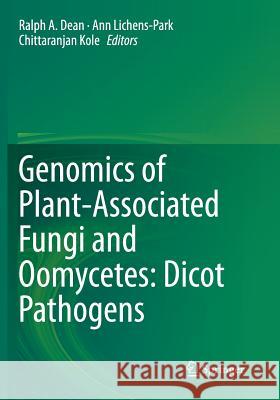
This book describes how genomics has revolutionized our understanding of agriculturally important plant-associated fungi and oomycetes. It illustrates some fundamental discoveries about these eukaryotic microbes with regard to the overall structure of their genomes, their lifestyles and the molecular mechanisms that form the basis of their interactions with plants. Genomics has provided new insights into fungal lifestyles and led to practical advances in plant breeding and crop protection, such as predictions about the spread and evolution of new pathogens.
This volume focuses on fungi and...
This book describes how genomics has revolutionized our understanding of agriculturally important plant-associated fungi and oomycetes. It illustrates...
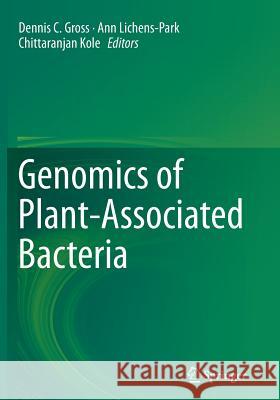
Dennis C. Gross Ann Lichens-Park Chittaranjan Kole
This book describes how genomics has revolutionized our scientific understanding of agriculturally important plant-associated bacteria. Each chapter focuses on the genomics of particular bacteria: the first described plant pathogen, Erwinia amylovora; phytoplasmas lacking cell walls; fastidious, phloem-restricted liberibacters; Pseudomonas syringae, which is a genetically tractable model system; Xanthomonas citri, which causes a disease that can devastate citrus crops and Pseudomonas fluorescens, which can protect plants from diseases.
Topics considered in...
This book describes how genomics has revolutionized our scientific understanding of agriculturally important plant-associated bacteria. Each chapte...