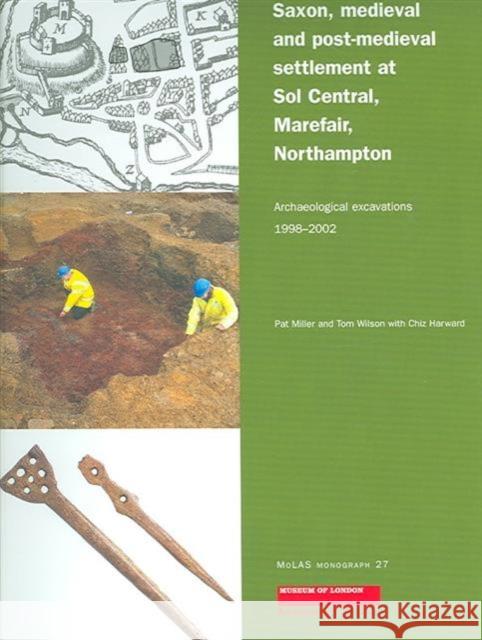
Excavation work by Northamptonshire Archaeology and MoLAS revealed residual prehistoric and Roman artefacts and Middle Saxon settlement evidence in the form of a single sunken-floored building. Activity intensified in the Late Saxon to Norman period, when metalworking, crop processing and bone working took place at the site. The establishment of buildings suggests the main Saxon settlement around St Peter's Church spread northeastwards towards the limits of the town. A cemetery was established on the site in the 10th century and associated with the chapel of St Martin in the 12th century,...
Excavation work by Northamptonshire Archaeology and MoLAS revealed residual prehistoric and Roman artefacts and Middle Saxon settlement evidence in th...
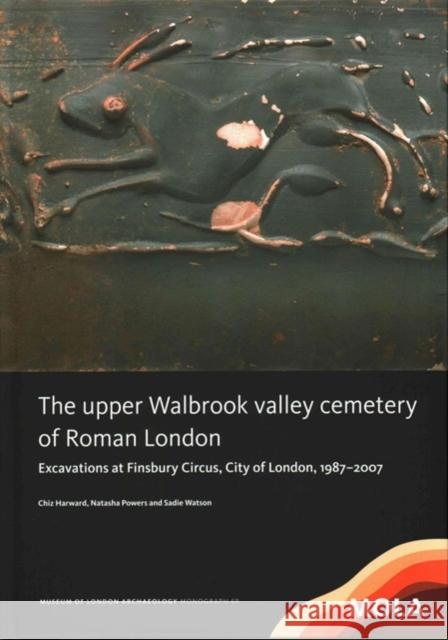
Six excavations (1987 2007) at Finsbury Circus on the north side of the City of London uncovered over 130 Romano-British burials, part of the upper Walbrook cemetery, to the west of the better-known northern cemetery (around Bishopsgate). Set within an area of marginal land, traversed by meandering tributary streams of the Walbrook, the cemetery provides intriguing insights into the management of burial space and attitudes to the dead, and a solution to one of the most intriguing problems of London s Roman archaeology the origin of the Walbrook skulls . The cemetery was in use by the end of...
Six excavations (1987 2007) at Finsbury Circus on the north side of the City of London uncovered over 130 Romano-British burials, part of the upper Wa...
One of London's largest archaeological excavations took place at Spitalfields Market, on the north-eastern fringe of the historic city, between 1991 and 2007. This book presents an archaeological history from the 16th to the 19th centuries, reconnecting the archaeological assemblages with documentary evidence in order to describe the place, people and possessions of the early modern suburb of Spitalfields. Following the closure of the medieval priory of St Mary Spital in the 1530s and the construction of private mansions, the largely residential enclave grew into the suburb of...
One of London's largest archaeological excavations took place at Spitalfields Market, on the north-eastern fringe of the historic city, betwee...
Excavation in 1997-2003 produced important new evidence for the development of Roman London. The site lay north-east of the bridge, towards the edge of the early town. Sparse commercial and domestic ribbon development here alongside early roads was ended by the Boudican revolt of AD 60/61. The military response is shown by the discovery of a previously unknown Roman military fortification, constructed over and partly out of the destroyed buildings. This is interpreted as part of an earthwork and timber fort, built c AD 63 in the aftermath of the revolt to secure the site of the...
Excavation in 1997-2003 produced important new evidence for the development of Roman London. The site lay north-east of the bridge, towards th...