This research, conducted from October 2008 to February 2010, assesses the potential safety benefits provided by the safety improvements at private highway-rail grade crossings in North Carolina along the Charlotte to Raleigh portion of the Southeast High-Speed Rail Corridor (SEHSR). The North Carolina Department of Transportation (NCDOT) proceeded with this set of safety improvements, commonly grouped under the program entitled Private Crossing Safety Initiative (PCSI), under Phase IV of its Sealed Corridor program. The progress is described in terms of safety benefits. Crash data through...
This research, conducted from October 2008 to February 2010, assesses the potential safety benefits provided by the safety improvements at private hig...
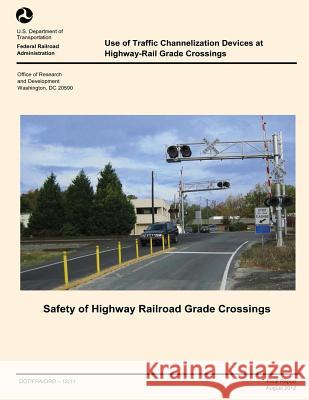
Traffic channelization devices have found new application at highway-rail grade crossings with active warning devices. Numerous studies conducted at locations where they have been installed show positive changes in unsafe driver behavior as a result of the treatments. When meeting certain requirements, traffic channelization devices and median barriers are an approved supplemental safety measure for the establishment of quiet zones. Traffic channelization devices are low cost and this makes them an attractive option for improving safety at highway-rail grade crossings.
Traffic channelization devices have found new application at highway-rail grade crossings with active warning devices. Numerous studies conducted at l...
The U.S. Department of Transportation Center for Climate Change and Environmental Forecasting is the focal loin in DOT of technical expertise on transportation and climate change. Through strategic research, policy analysis, partnerships, and outreach, the Center created comprehensive and multimodal approaches to reduce transportation-related greenhouse gases to mitigate the effects of global climate change on the transportation network.
The U.S. Department of Transportation Center for Climate Change and Environmental Forecasting is the focal loin in DOT of technical expertise on trans...
Transportation's Role in Reducing U.S. Greenhouse Gas Emissions is a report to Congress from the U.S. Department of Transportation (DOT) on the potential of transportation strategies to contribute to greenhouse gas reductions. Transportation has a significant impact on national greenhouse gas emissions, and transportation can be part of the nation's solution to the climate change challenge. The Energy Independence and Security Act (December 2007) called upon DOT, in consultation with the U.S. Environmental Protection Agency (EPA) and the U.S. Global Change Research Program (USGCRP), to...
Transportation's Role in Reducing U.S. Greenhouse Gas Emissions is a report to Congress from the U.S. Department of Transportation (DOT) on the potent...
This guidebook was prepared with the objective of providing resource information for transit agencies and the FTA regarding the development and implementation of Safety Management Systems (SMS) and Safety Performance Measurement Systems (SPMS). SMS offer the most promising means of preventing public transportation accidents by integrating safety into all aspects of a transit system's activities, from planning to design to construction to operations to maintenance. Safety management is based on the fact that there will always be hazards and risks in public transportation. Therefore, systematic...
This guidebook was prepared with the objective of providing resource information for transit agencies and the FTA regarding the development and implem...
Congress requires the Bureau of Transportation Statistics (BTS) of the Research and Innovative Technology Administration (RITA) to report on transportation statistics to the President and Congress. This Transportation Statistics Annual Report is the 13th such report prepared in response to this congressional mandate, laid out in 49 U.S.C. 111 (1). In addition to presenting the state of transportation statistics, the report focuses on transportation indicators pertinent to the Strategic Plan of the U.S. Department of Transportation; the RITA report, Transportation Vision for 2030; and the 13...
Congress requires the Bureau of Transportation Statistics (BTS) of the Research and Innovative Technology Administration (RITA) to report on transport...
The Bureau of Transportation Statistics of the Research and Innovative Technology Administration is required by law to report on transportation statistics to the President and Congress. This Transportation Statistics Annual Report is the 15th such report prepared in response to this legislative mandate.
The Bureau of Transportation Statistics of the Research and Innovative Technology Administration is required by law to report on transportation statis...
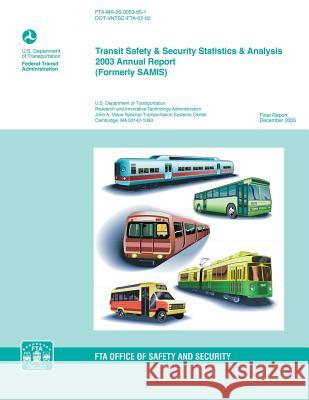
The Transit Safety & Security Statistics & Analysis 2003 Annual Report (formerly SAMIS) is a compilation and analysis of mass transit accident, casualty, and crime statistics reported under the Federal Transit Administration's (FTA's) National Transit Database Reporting System by transit systems that were beneficiaries of FTA Urbanized Area Formula funds in the United States during 2003.
The Transit Safety & Security Statistics & Analysis 2003 Annual Report (formerly SAMIS) is a compilation and analysis of mass transit accident, casual...
The purpose of this document is to highlight the import ace of the region's fright transportation system to businesses and residents, particularly in terms of its contributions to regional economic development and quality of life.
The purpose of this document is to highlight the import ace of the region's fright transportation system to businesses and residents, particularly in ...
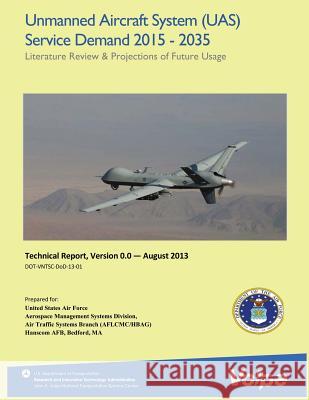
This report assesses opportunities, risks, and challenges attendant to future development and deployment of UAS within the National Airspace System (NAS) affecting UAS forecast growth from 2015 to 2035. Analysis of four key areas is performed: technology, mission needs, economics, and existing or anticipated challenges to routine use in NAS operations. Forecast effects of emerging technologies as well as anticipating new technological innovations in areas of airframes, powerplants, sensors, communication, command and control systems, and information technology and processing are evaluated....
This report assesses opportunities, risks, and challenges attendant to future development and deployment of UAS within the National Airspace System (N...