In this sixtieth anniversary edition of The Idea of Nationalism, Craig Calhoun probes the work of Hans Kohn and the world that fi rst brought prominence to this unparalleled defense of the national ideal in the modern West. At its publication, Saturday Review called it "an enduring and defi nitive treatise.... Kohn] has written a book which is less a history of nationalism than it is a history of Western civilization from the standpoint of the national idea." This edition includes an extensive new introduction by Craig Calhoun, which in itself is a substantial contribution to the history of...
In this sixtieth anniversary edition of The Idea of Nationalism, Craig Calhoun probes the work of Hans Kohn and the world that fi rst brought prominen...
In this reinterpretation and extension of the critical theory tradition, Craig Calhoun surveys the origins, fortunes and prospects of this most influential of theoretical approaches. Moving from the early Frankfurt School to Habermas, to contemporary debates over postmodernism, feminism and nationalism, Calhoun breathes new life into critical social theory, showing how it can learn from the past and contribute to the future.
In this reinterpretation and extension of the critical theory tradition, Craig Calhoun surveys the origins, fortunes and prospects of this most influe...
New social movements of the post-war era have brought to prominence the idea that identity can be a crucial focus for political struggle. Linked to an increasing recognition that social theory itself must put the politics of identity on center stage, this volume impels social theorists not only to make sense of the -world out there-, but also to make sense of differences within the discourse of theory.
New social movements of the post-war era have brought to prominence the idea that identity can be a crucial focus for political struggle. Linked to an...
Cosmopolitics, the concept of a world politics based on shared democratic values, is in an increasingly fragile state. While Western democracies insist ever more vehemently upon a maintenance of their privileges--freedom of speech, security, wealth--an increasing number of the world's inhabitants are under threat of poverty, famine and war. What is needed, the writers suggest, is a deliberate decision to extend the principles and values of democracy to the sphere of international relations. Recent experience does not bode well, but their arguments, which range from reform of the United...
Cosmopolitics, the concept of a world politics based on shared democratic values, is in an increasingly fragile state. While Western democracies insis...
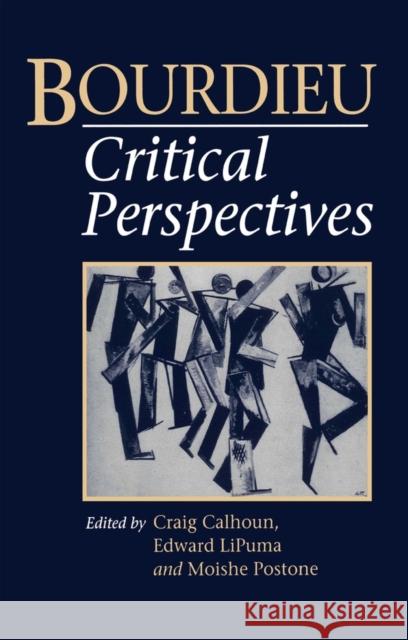
This volume presents a critical appraisal of Bourdieu's work, spanning the fields of sociology, anthropology and cultural studies. The essays show how Bourdieu's voluminous work forms a distinctive intellectual approach, compare Bourdieu's analytic approach to others current in Anglo-American sociology, anthropology and cultural studies, and raise a variety of crucial theoretical questions that are important to understanding Bourdieu.
This volume presents a critical appraisal of Bourdieu's work, spanning the fields of sociology, anthropology and cultural studies. The essays show how...
Response to financial meltdown is entangled with basic challenges to global governance. Environment, global security and ethnicity and nationalism are all global issues today. Focusing on the political and social dimensions of the crisis, contributors examine changes in relationships between the world's richer and poorer countries, efforts to strengthen global institutions, and difficulties facing states trying to create stability for their citizens.
Contributors include: William Barnes, Rogers Brubaker, Vincent Della Sala, Nils Gilman, David Held, Mary Kaldor, Adrian Pabst, Ravi...
Response to financial meltdown is entangled with basic challenges to global governance. Environment, global security and ethnicity and nationalism ...
The global financial crisis showed deep problems with mainstream economic predictions, as well as the vulnerability of the world's richest countries and the enormous potential of some poorer ones. China, India, Brazil, and other counties are growing faster than Europe or America and have weathered the crisis better. Is their growth due to following conventional economic guidelines or to strong state leadership and sometimes protectionism? These issues are basic to the question of which countries will grow in comind decades, as well as the likely conflicts over global trade policy, currency...
The global financial crisis showed deep problems with mainstream economic predictions, as well as the vulnerability of the world's richest countries a...
The first three volumes of the series, available for purchase as a set now
The Possible Futures Series gathers together leading social scientists to address the significance of the global economic crisis in a series of short, accessible books. Each volume takes on the past, present, and future of this crisis suggesting that it has an informative history, that the consequences could be much more basic than the stock market declines, and that only fundamental changes -- not fiscal band-aids -- can head off future repetitions.
CONTRIBUTORS INCLUDE: Immanuel Wallerstein, David Harvey,...
The first three volumes of the series, available for purchase as a set now
The Possible Futures Series gathers together leading social scientists t...