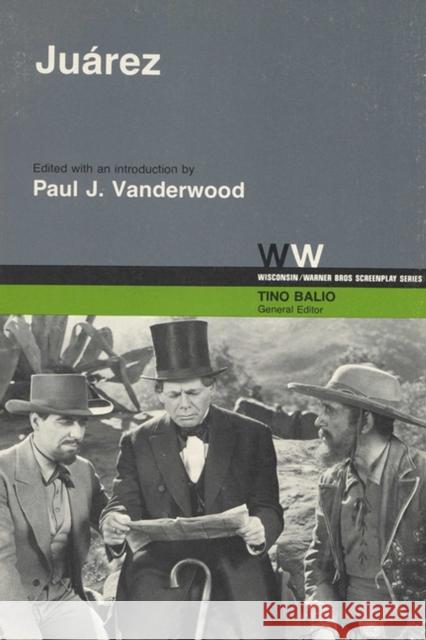
Juarez was Warner Brothers' cinematic attempt to answer the major international question of the 1930s: would democracy or dictatorship prevail? Eager to further the foreign policy objectives of its friend Franklin Delano Roosevelt and equally willing to add to its prestigious and profitable biography series, the stuido set a record high budget and assembled special film stock, extensive scholarly research, a loose time schedule, a renowned director, and a stellar cast that included Paul Muni, Brian Aherne, and Bette Davis. The film was meant to be an ideologically clear-cut...
Juarez was Warner Brothers' cinematic attempt to answer the major international question of the 1930s: would democracy or dictatorship preva...
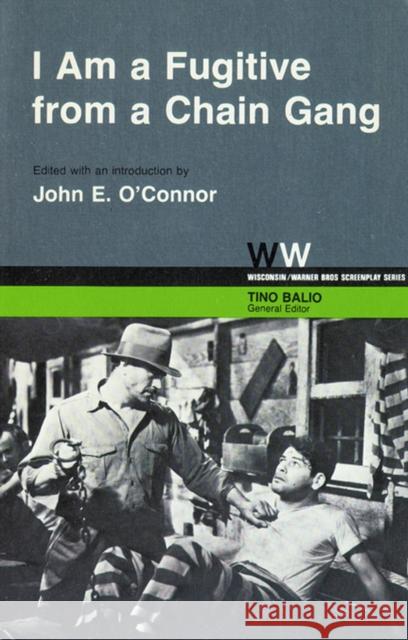
Since its release in 1932, "I Am a Fugitive From a Chain Gang" had earned a reputation as one of the few Hollywood products that can be associated directly with social change. Film historians attribute the reform of the southern chain gang system to the public outrage generated by this movie, which depicts a true story. In addition to being an important social document, the film remains a gripping experience for filmgoers today because of its unusual dramatic conception, its hauntingly inconclusive ending, and Paul Muni's performance as the good boy forced to go wrong.
This book...
Since its release in 1932, "I Am a Fugitive From a Chain Gang" had earned a reputation as one of the few Hollywood products that can be associated...
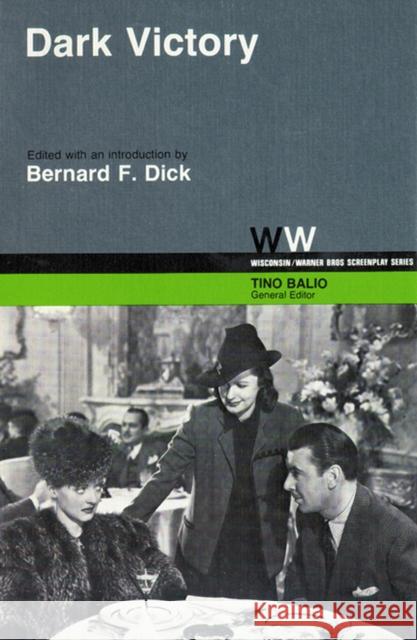
" Dark Victory," released in 1939, was a daring movie for its time. it depicted its heroine, Bette Davis, dying of a brain tumor. The film blended romance and realism so successfully that it is still a model for movies about death and dying today. Bette Davis drew upon every mood she had ever expressed--insouciance, impatience, anger, passion, acquiescence. She worked hard at the role, reveling in a story that, according to her account, she had actively campaigned for. She also benefited greatly by the professional talents of director Edmund Goulding and screenwriter Casey Robinson and...
" Dark Victory," released in 1939, was a daring movie for its time. it depicted its heroine, Bette Davis, dying of a brain tumor. The film blended ...
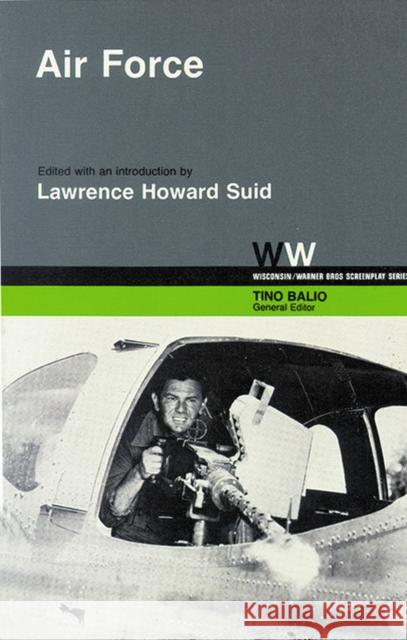
Released in 1943, Air Force was immediately hailed as the definitive "patriotic heart-throb in celluloid" that America, engulfed in war and passionately bent on victory, was primed to embrace. Lawrence Suid charts the evolution of this cinematic success in his introduction to the screenplay, tracing the tangled network of artistic, military, and nationalist interests that molded this film and made it, even after the martial fervor had settled, a standard against which all future films about war would be measured. Throughout the filming, there was tension between the aims of the...
Released in 1943, Air Force was immediately hailed as the definitive "patriotic heart-throb in celluloid" that America, engulfed in war and ...
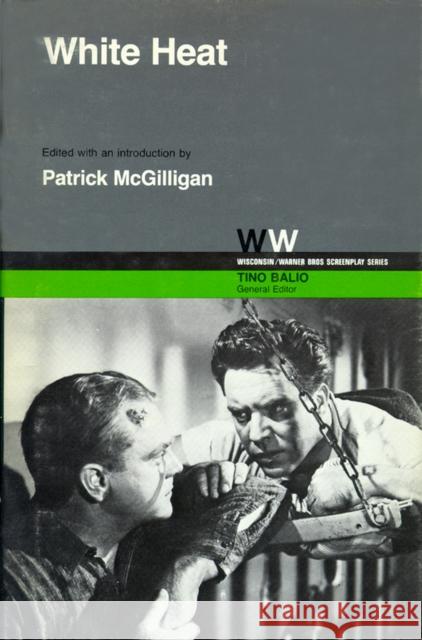
Among the countless gangster films produced by Hollywood, few are as haunting, complex, or ingeniously crafted as "White Heat" (1948). Students of film history and screen writing will appreciate this treatment--an engaging study of teh various artistic elements that turned what might have been just another gangster film into an innovative classic of the genre and a model of cooperative filmmaking at its best. Crucial to "White Heat's" success, McGilligan stresses, was the rare manner in which every aspect of production coalesced: studio, script, cast, crew, and director.
Among the countless gangster films produced by Hollywood, few are as haunting, complex, or ingeniously crafted as "White Heat" (1948). Students of...
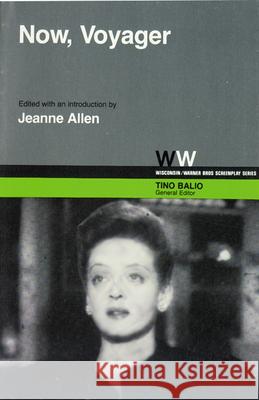
Now Voyager (1942) is appreciated today for a skillfully modulated performance by Bette Davis and a rare theme in American mass culture the study of a woman's struggle for independence. This book includes the complete screenplay.
"
Now Voyager (1942) is appreciated today for a skillfully modulated performance by Bette Davis and a rare theme in American mass culture the ...
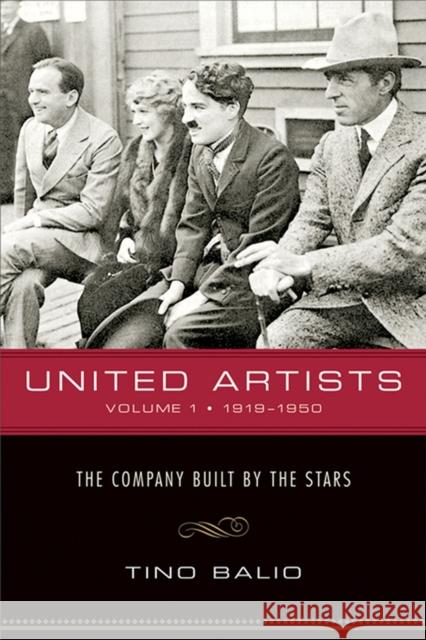
United Artists was a unique motion picture company in the history of Hollywood. Founded by Charlie Chaplin, Mary Pickford, Douglas Fairbanks, and director D.W. Griffith-four of the greatest names of the silent era-United Artists functioned as a distribution company for independent producers. In this lively and detailed history of United Artists from 1919 through 1951, film scholar Tino Balio chronicles the company's struggle for survival, its rise to prominence as the Tiffany of the industry, and its near extinction in the 1940s. This edition is updated with a new introduction by Balio...
United Artists was a unique motion picture company in the history of Hollywood. Founded by Charlie Chaplin, Mary Pickford, Douglas Fairbanks, and dire...
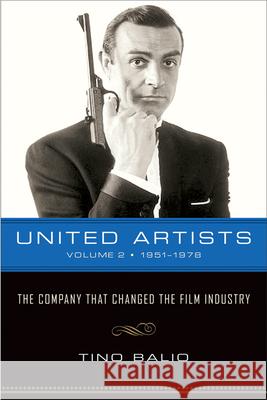
In this second volume of Tino Balio's history of United Artists, he examines the turnaround of the company in the hands of Arthur Krim and Robert Benjamin in the 1950s, when United Artists devised a successful strategy based on the financing and distribution of independent production that transformed the company into an industry leader. Drawing on corporate records and interviews, Balio follows United Artists through its merger with Transamerica in the 1960s and its sale to MGM after the financial debacle of the film Heaven's Gate. With its attention to the role of film as both an art...
In this second volume of Tino Balio's history of United Artists, he examines the turnaround of the company in the hands of Arthur Krim and Robert Benj...