Protest and Possibilities explores the pursuit of political reform in Malaysia, an illiberal democracy, and contrasts coalition-building and reform processes there with those of electoral authoritarian Indonesia. The study considers the roles of civil society agents (CSAs) in promoting alternative (especially noncommunal) political norms and helping to find common ground among opposition political actors, and compares recent reformist initiatives with past political trajectories. The nature of illiberal democracy encourages a combination of contained and transgressive contention,...
Protest and Possibilities explores the pursuit of political reform in Malaysia, an illiberal democracy, and contrasts coalition-building and...
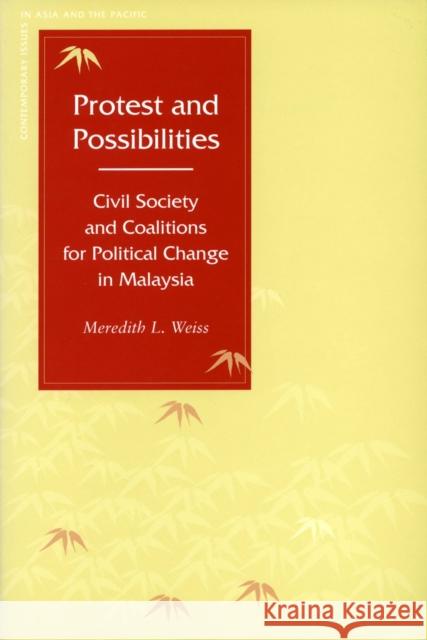
Protest and Possibilities explores the pursuit of political reform in Malaysia, an illiberal democracy, and contrasts coalition-building and reform processes there with those of electoral authoritarian Indonesia. The study considers the roles of civil society agents (CSAs) in promoting alternative (especially noncommunal) political norms and helping to find common ground among opposition political actors, and compares recent reformist initiatives with past political trajectories. The nature of illiberal democracy encourages a combination of contained and transgressive contention,...
Protest and Possibilities explores the pursuit of political reform in Malaysia, an illiberal democracy, and contrasts coalition-building and...
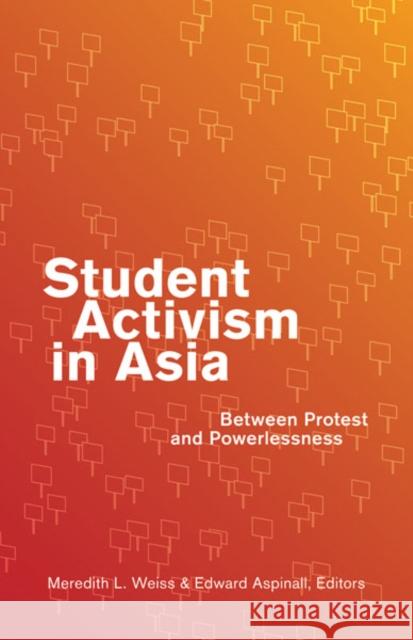
Since World War II, students in East and Southeast Asia have led protest movements that toppled authoritarian regimes in countries such as Indonesia, South Korea, and Thailand. Elsewhere in the region, student protests have shaken regimes until they were brutally suppressed--most famously in China's Tiananmen Square and in Burma. But despite their significance, these movements have received only a fraction of the notice that has been given to American and European student protests of the 1960s and 1970s. The first book in decades to redress this neglect, Student Activism in Asia...
Since World War II, students in East and Southeast Asia have led protest movements that toppled authoritarian regimes in countries such as Indonesi...
While homophobia is commonly characterized as individual and personal prejudice, this collection of essays instead explores homophobia as a transnational political phenomenon. Contributors theorize homophobia as a distinct configuration of repressive state-sponsored policies and practices with their own causes, explanations, and effects on how sexualities are understood and experienced in a range of national contexts. The essays include a broad range of geographic cases, including France, Ecuador, Iran, Lebanon, Poland, Singapore, and the United States.
While homophobia is commonly characterized as individual and personal prejudice, this collection of essays instead explores homophobia as a transnatio...
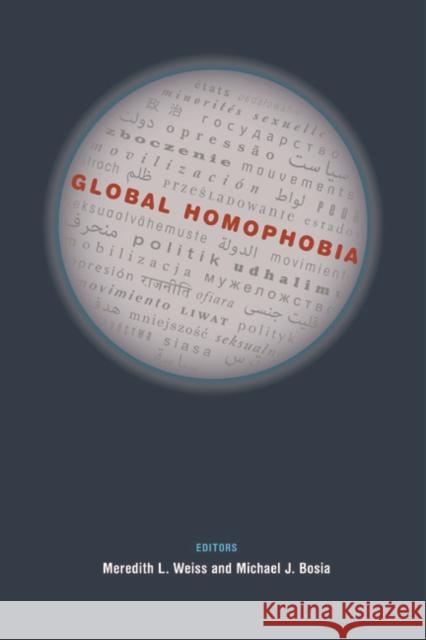
While homophobia is commonly characterized as individual and personal prejudice, this collection of essays instead explores homophobia as a transnational political phenomenon. Contributors theorize homophobia as a distinct configuration of repressive state-sponsored policies and practices with their own causes, explanations, and effects on how sexualities are understood and experienced in a range of national contexts. The essays include a broad range of geographic cases, including France, Ecuador, Iran, Lebanon, Poland, Singapore, and the United States.
While homophobia is commonly characterized as individual and personal prejudice, this collection of essays instead explores homophobia as a transnatio...