Shanghai in the early twentieth century was alive with art and culture. With the proliferation of popular genres such as the martial arts film, the contest among various modernist filmmakers, and the advent of sound, Chinese cinema was transforming urban life. But with the Japanese invasion in 1937, all of this came to a screeching halt. Until recently, the political establishment has discouraged comprehensive studies of the cultural phenomenon of early Chinese film, and this momentous chapter in China's history has remained largely unexamined. The first sustained historical study of the...
Shanghai in the early twentieth century was alive with art and culture. With the proliferation of popular genres such as the martial arts film, the co...
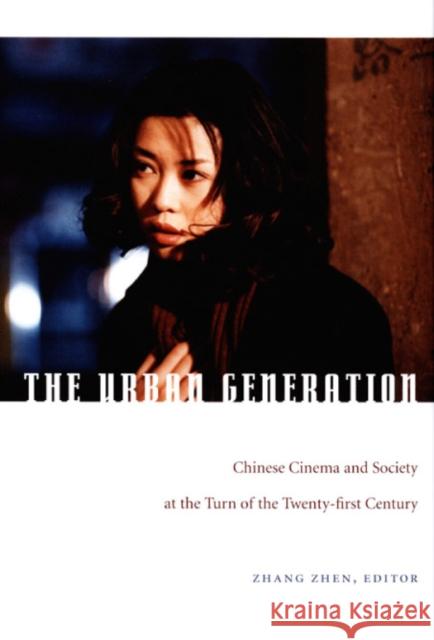
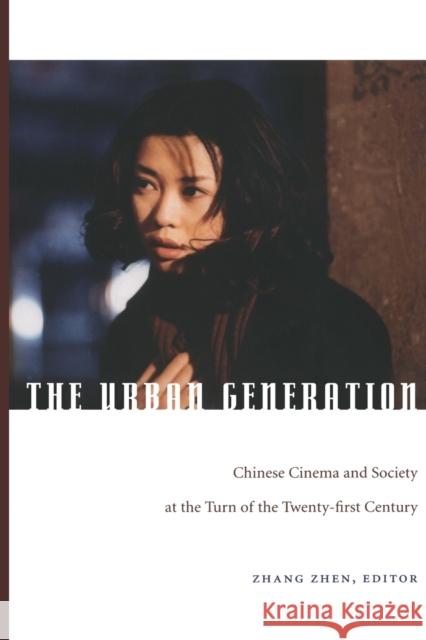
Since the early 1990s, while mainland China s state-owned movie studios have struggled with financial and ideological constraints, an exciting alternative cinema has developed. Dubbed the Urban Generation, this new cinema is driven by young filmmakers who emerged in the shadow of the events at Tiananmen Square in 1989. What unites diverse directors under the Urban Generation rubric is their creative engagement with the wrenching economic and social transformations underway in China. Urban Generation filmmakers are vanguard interpreters of the confusion and anxiety triggered by the massive...
Since the early 1990s, while mainland China s state-owned movie studios have struggled with financial and ideological constraints, an exciting alterna...
Since the early 1990s, while mainland China s state-owned movie studios have struggled with financial and ideological constraints, an exciting alternative cinema has developed. Dubbed the Urban Generation, this new cinema is driven by young filmmakers who emerged in the shadow of the events at Tiananmen Square in 1989. What unites diverse directors under the Urban Generation rubric is their creative engagement with the wrenching economic and social transformations underway in China. Urban Generation filmmakers are vanguard interpreters of the confusion and anxiety triggered by the massive...
Since the early 1990s, while mainland China s state-owned movie studios have struggled with financial and ideological constraints, an exciting alterna...
There are two main approaches in the theory of network error correction coding. In this SpringerBrief, the authors summarize some of the most important contributions following the classic approach, which represents messages by sequences similar to algebraic coding, and also briefly discuss the main results following the other approach, that uses the theory of rank metric codes for network error correction of representing messages by subspaces. This book starts by establishing the basic linear network error correction (LNEC) model and then characterizes two equivalent descriptions. Distances...
There are two main approaches in the theory of network error correction coding. In this SpringerBrief, the authors summarize some of the most importan...
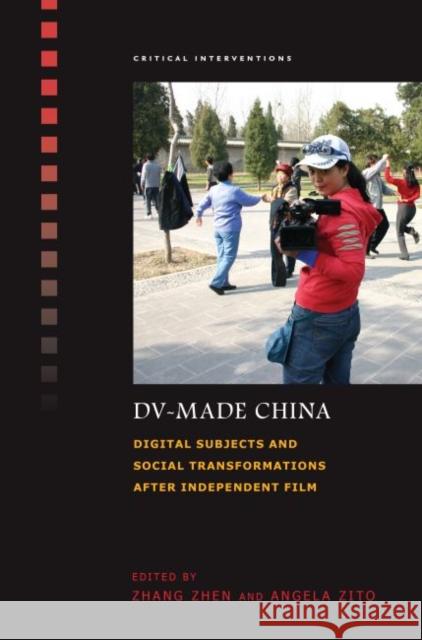
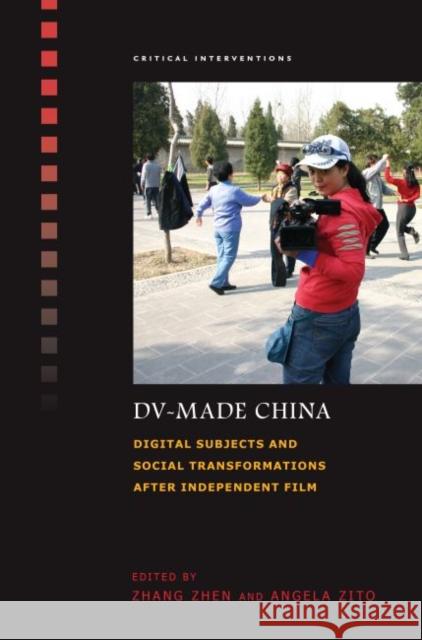
In 1990s post-Reform China, a growing number of people armed with video cameras poured out upon the Chinese landscape to both observe and contribute to the social changes then underway. Happening upon the crucial platform of an older independent film movement, this digital turn has given us a DV China that includes film and media communities across different social strata and disenfranchised groups, including ethnic and religious minorities and LGBTQ communities. DV-Made China takes stock of these phenomena by surveying the social and cultural landscape of grassroots and alternative cinema...
In 1990s post-Reform China, a growing number of people armed with video cameras poured out upon the Chinese landscape to both observe and contribut...
In 1990s post-Reform China, a growing number of people armed with video cameras poured out upon the Chinese landscape to both observe and contribute to the social changes then underway. Happening upon the crucial platform of an older independent film movement, this digital turn has given us a DV China that includes film and media communities across different social strata and disenfranchised groups, including ethnic and religious minorities and LGBTQ communities. DV-Made China takes stock of these phenomena by surveying the social and cultural landscape of grassroots and alternative cinema...
In 1990s post-Reform China, a growing number of people armed with video cameras poured out upon the Chinese landscape to both observe and contribut...