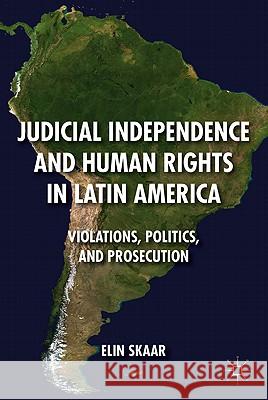
This comparative analysis, focusing on Argentina, Chile, and Uruguay, explores the complex relationship between executive politics and judicial action, showing that judicial independence is a crucial factor in prosecution. It will engage Latin Americanists as well as all who are concerned with justice and human rights around the world.
This comparative analysis, focusing on Argentina, Chile, and Uruguay, explores the complex relationship between executive politics and judicial action...
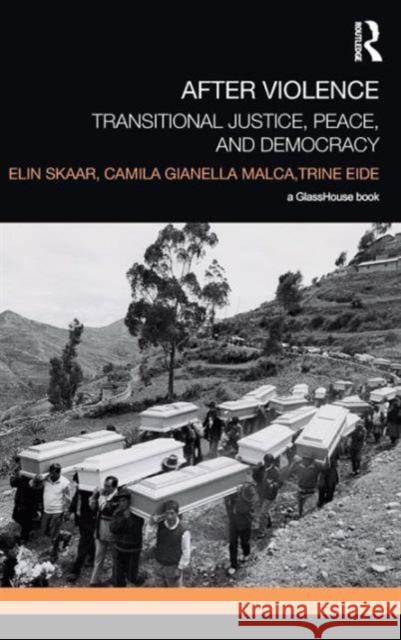
After Violence: Transitional Justice, Peace, and Democracy examines the effects of transitional justice on the development of peace and democracy. Anticipated contributions of transitional justice mechanisms are commonly stated in universal terms, with little regard for historically specific contexts. Yet a truth commission, for example, will not have the same function in a society torn by long-term civil war or genocide as in a society emerging from authoritarian repression. Addressing trials, reparations, truth commissions, and amnesties, the book systematically...
After Violence: Transitional Justice, Peace, and Democracy examines the effects of transitional justice on the development of pea...
This book addresses current developments in transitional justice in Latin America effectively the first region to undergo concentrated transitional justice experiences in modern times. Using a comparative approach, it examines trajectories in truth, justice, reparations, and amnesties in countries emerging from periods of massive violations of human rights and humanitarian law. The book examines the cases of Argentina, Brazil, Chile, Colombia, Guatemala, El Salvador, Paraguay, Peru and Uruguay, developing and applying a common analytical framework to provide a systematic, qualitative and...
This book addresses current developments in transitional justice in Latin America effectively the first region to undergo concentrated transitional...
This comparative analysis, focusing on Argentina, Chile, and Uruguay, explores the complex relationship between executive politics and judicial action, showing that judicial independence is a crucial factor in prosecution. It will engage Latin Americanists as well as all who are concerned with justice and human rights around the world.
This comparative analysis, focusing on Argentina, Chile, and Uruguay, explores the complex relationship between executive politics and judicial action...
After Violence: Transitional Justice, Peace, and Democracy examines the effects of transitional justice on the development of peace and democracy. Anticipated contributions of transitional justice mechanisms are commonly stated in universal terms, with little regard for historically specific contexts. Yet a truth commission, for example, will not have the same function in a society torn by long-term civil war or genocide as in a society emerging from authoritarian repression. Addressing trials, reparations, truth commissions, and amnesties, the book systematically...
After Violence: Transitional Justice, Peace, and Democracy examines the effects of transitional justice on the development of pea...