Among seventeenth-century classical French writers La Rochefoucauld owes his renown to his maxims and La Bruyere to his stylised portraits, or caracteres. This book starts from the basic assumption that both writers were 'moralists', and as such were concerned with a universal picture of man and society within the limitations of nature and reason. The two moralists are studied separately. Professor de Mourgues stresses their individual characteristics, and the complexity of their views. She draws attention to the problems of literary diction they had to face, and comments on the artistic...
Among seventeenth-century classical French writers La Rochefoucauld owes his renown to his maxims and La Bruyere to his stylised portraits, or caracte...
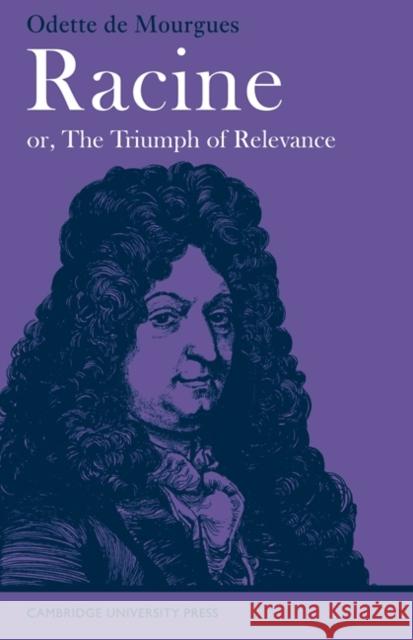
This is a digital reprint of Mme de Mourgues' critical introduction to the work of Racine for the student and the general reader. It concentrates entirely on the plays themselves, and attempts to say what they are and how they work on the mind of the spectator or reader. Mme de Mourgues' main point is admirably expressed in her title. Everything in Racine's plays is directed to a single end: the heightening of the feeling of tragic conflict. The separable literary or dramatic conventions have no importance in themselves - their only claim on the attention is their function in the drama, their...
This is a digital reprint of Mme de Mourgues' critical introduction to the work of Racine for the student and the general reader. It concentrates enti...