In 1837 Representative Joseph J. Anthony stabs the speaker of the house to death during a debate about wolf pelts. In 1899 Hot Springs police shoot it out with the county sheriffs over control of illegal gambling. In 1974 President Richard Nixon resigns in part due to the outspokenness of Pine Bluff native Martha Mitchell. In this special print project of the online Encyclopedia of Arkansas History & Culture, legendary cartoonist Ron Wolfe brings these and many other stories to life. Accompanied by selected entries from the encyclopedia, Wolfe's cartoons highlight the oddities and absurdities...
In 1837 Representative Joseph J. Anthony stabs the speaker of the house to death during a debate about wolf pelts. In 1899 Hot Springs police shoot it...
On April 2, 1917, the United States officially entered a war that had been raging for nearly three years in Europe. Even though America's involvement in the "Great War" lasted little more than a year and a half, the changes it wrought were profound. More than seventy thousand Arkansans served as soldiers during the war. Wartime propaganda led to suspicions directed against Germans, Jehovah's Witnesses, and African Americans in Arkansas, but war production proved a boon to the state in the form of greater demand for cotton, minerals, and timber. World War I connected Arkansas to the world in...
On April 2, 1917, the United States officially entered a war that had been raging for nearly three years in Europe. Even though America's involvement ...
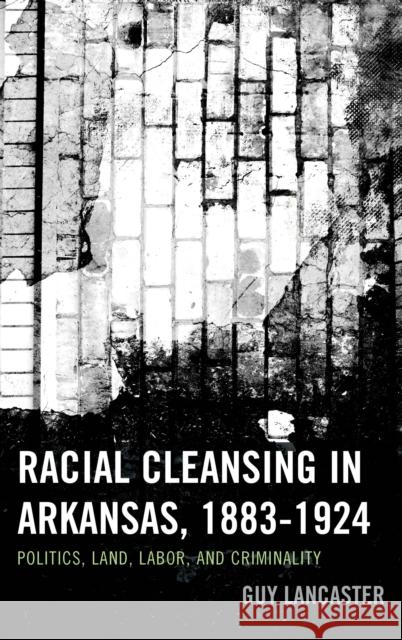
Racial Cleansing in Arkansas, 1883-1924: Politics, Land, Labor, and Criminality constitutes the first examination of racial cleansing within a particular state, placing Arkansas's record of exclusionary racial violence within the context of the state's political developments, as well as the context of the broader body of ethnic conflict studies.
Racial Cleansing in Arkansas, 1883-1924: Politics, Land, Labor, and Criminality constitutes the first examination of racial cleansing within a particu...