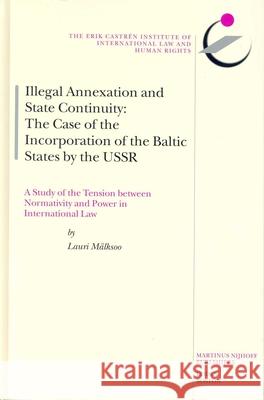
The depth and intensity of the transformation in Eastern and Central Europe in the 1980's and 1990's took most diplomats and political commentators by surprise. Needless to say, European politics now looks completely different from how it did during the stale years of the Cold War. This volume is an in-depth analysis of one aspect of the transformation - namely the Baltic States' struggle to regain the statehood they had lost in the Soviet occupation in June 1940. It analyses the claim of illegality of the Soviet occupation, arguments about possible prescription, the legal consequences of...
The depth and intensity of the transformation in Eastern and Central Europe in the 1980's and 1990's took most diplomats and political commentators by...
In Russia and European Human-Rights Law: The Rise of the Civilizational Argument, Lauri Malksoo and his co-authors critically examine Russia's experiences as part of the European human-rights protection system since its admittance to the Council of Europe in 1998. The authors combine legal and constructivist international-relations theory perspectives in studying Russia's practice and rhetoric as a member of the Council of Europe and a subject to the jurisdiction of the European Court of Human Rights. Certain aspects of human-rights doctrine and practice in Russia are particularly...
In Russia and European Human-Rights Law: The Rise of the Civilizational Argument, Lauri Malksoo and his co-authors critically examine Russia's...
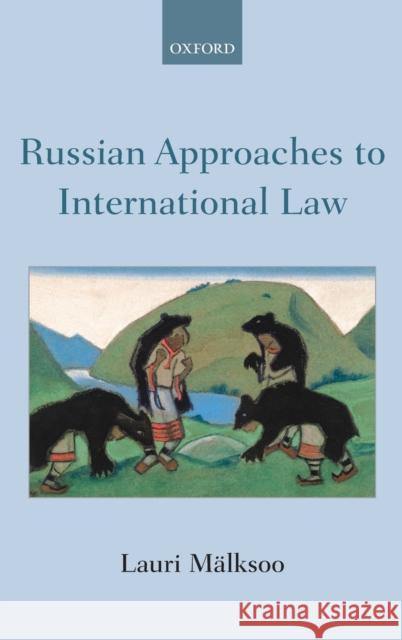
This book addresses a simple question: how do Russians understand international law? Is it the same understanding as in the West or is it in some ways different and if so, why? It answers these questions by drawing on from three different yet closely interconnected perspectives: history, theory, and recent state practice. The work uses comparative international law as starting point and argues that in order to understand post-Soviet Russia's state and scholarly approaches to international law, one should take into account the history of ideas in Russia. To an extent, Russian...
This book addresses a simple question: how do Russians understand international law? Is it the same understanding as in the West or is it in some ways...