This volume, one of the books in the "Making of Modern Freedom" series, is a collection of essays by eminent historians who explore the relationship between state finance and political development in fifteenth and sixteenth century Europe. They analyze how during this period European states were engaged in nearly continuous warfare and how those warfares produced fiscal crises. As a result, rulers were forced to enter into novel fiscal agreements with their subjects, often providing their subjects more political power, in exchange.
The volume begins with two essays on England....
This volume, one of the books in the "Making of Modern Freedom" series, is a collection of essays by eminent historians who explore the relationshi...
Between 1492 and 1914, Europeans conquered 84 percent of the globe. But why did Europe establish global dominance, when for centuries the Chinese, Japanese, Ottomans, and South Asians were far more advanced? In Why Did Europe Conquer the World?, Philip Hoffman demonstrates that conventional explanations--such as geography, epidemic disease, and the Industrial Revolution--fail to provide answers. Arguing instead for the pivotal role of economic and political history, Hoffman shows that if certain variables had been different, Europe would have been eclipsed, and another power could...
Between 1492 and 1914, Europeans conquered 84 percent of the globe. But why did Europe establish global dominance, when for centuries the Chinese, ...
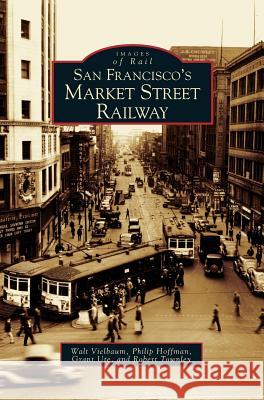
The Market Street Railway Company thrived in an age when rails ruled San Francisco. Spanning the Roaring Twenties, the Great Depression, and the boom times of World War II, it had a long and legendary lifetime that is deeply ingrained in the city's early identity. Gradually, however, it became challenged by the emergence of the automobile, cheaper motor coaches, and "nickel jitneys"--competing cars on the same routes. The MSRy painted the fronts of its cars white to show up well in San Francisco's misty weather, and for many years people called them "the White Front cars." Franchise...
The Market Street Railway Company thrived in an age when rails ruled San Francisco. Spanning the Roaring Twenties, the Great Depression, and the boom ...