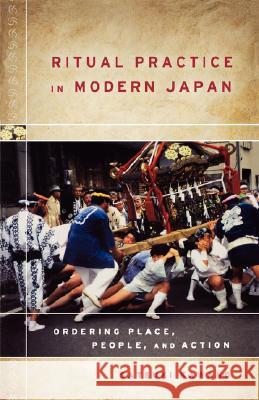
National surveys indicate that most Japanese, while professing no religious commitment, frequently perform rituals: They regularly tend their family home altars, look after family graves, participate in neighborhood festivals, and visit Shinto shrines and Buddhist temples. Are these rituals mere formalities?
Based on fourteen months of fieldwork in Kamakura city near Tokyo, Satsuki Kawano examines the power of ritual and its relevance for modern urbanites. She reveals the indebtedness of ritual to forms that create an elevated context and infuse the mundane with a sense of moral...
National surveys indicate that most Japanese, while professing no religious commitment, frequently perform rituals: They regularly tend their famil...
Based on extensive fieldwork, Nature's Embrace reveals the emerging pluralization of death rites in postindustrial Japan. Low birth rates and high numbers of people remaining permanently single have led to a shortage of ceremonial caregivers (most commonly married sons and their wives) to ensure the transformation of the dead into ancestors resting in peace. Consequently, older adults are increasingly uncertain about who will perform memorial rites for them and maintain their graves. In this study, anthropologist Satsuki Kawano examines Japan's changing death rites from the perspective of...
Based on extensive fieldwork, Nature's Embrace reveals the emerging pluralization of death rites in postindustrial Japan. Low birth rates and high ...
Based on extensive fieldwork, Nature's Embrace reveals the emerging pluralization of death rites in postindustrial Japan. Low birth rates and high numbers of people remaining permanently single have led to a shortage of ceremonial caregivers (most commonly married sons and their wives) to ensure the transformation of the dead into ancestors resting in peace. Consequently, older adults are increasingly uncertain about who will perform memorial rites for them and maintain their graves. In this study, anthropologist Satsuki Kawano examines Japan's changing death rites from the perspective of...
Based on extensive fieldwork, Nature's Embrace reveals the emerging pluralization of death rites in postindustrial Japan. Low birth rates and high ...
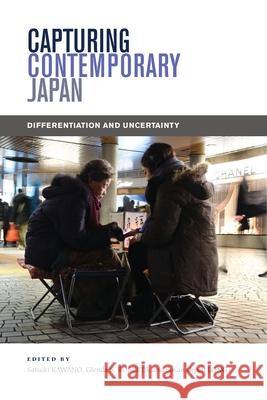
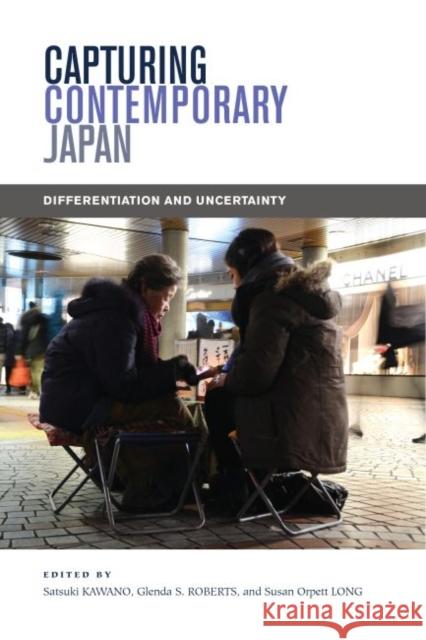
What are people's life experiences in present-day Japan? This timely volume addresses fundamental questions vital to understanding Japan in the first decade of the twenty-first century. Its chapters collectively reveal a questioning of middle-class ideals once considered the essence of Japaneseness. In the postwar model household a man was expected to obtain a job at a major firm that offered life-long employment; his counterpart, the "professional" housewife, managed the domestic sphere and the children, who were educated in a system that provided a path to mainstream success. In the past...
What are people's life experiences in present-day Japan? This timely volume addresses fundamental questions vital to understanding Japan in the fir...
What are people's life experiences in present-day Japan? This timely volume addresses fundamental questions vital to understanding Japan in the first decade of the twenty-first century. Its chapters collectively reveal a questioning of middle-class ideals once considered the essence of Japaneseness. In the postwar model household a man was expected to obtain a job at a major firm that offered life-long employment; his counterpart, the "professional" housewife, managed the domestic sphere and the children, who were educated in a system that provided a path to mainstream success. In the past...
What are people's life experiences in present-day Japan? This timely volume addresses fundamental questions vital to understanding Japan in the fir...