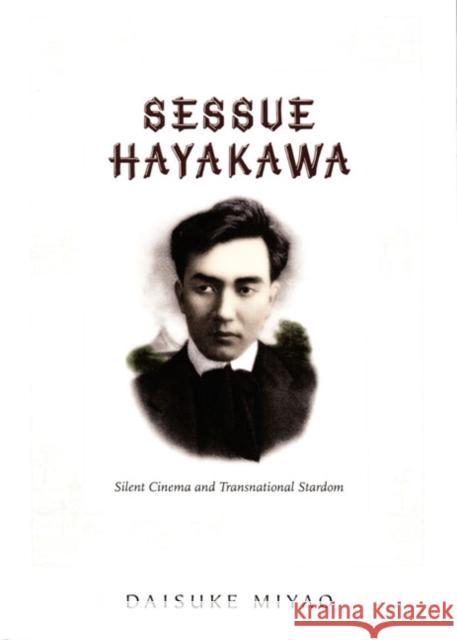
While the actor Sessue Hayakawa (1886 1973) is perhaps best known today for his Oscar-nominated turn as a Japanese military officer in The Bridge on the River Kwai (1957), in the early twentieth century he was an internationally renowned silent film star, as recognizable as Charlie Chaplin or Douglas Fairbanks. In this critical study of Hayakawa s stardom, Daisuke Miyao reconstructs the Japanese actor s remarkable career, from the films that preceded his meteoric rise to fame as the star of Cecil B. DeMille s The Cheat (1915) through his reign as a matinee idol and the...
While the actor Sessue Hayakawa (1886 1973) is perhaps best known today for his Oscar-nominated turn as a Japanese military officer in The Bridge o...
While the actor Sessue Hayakawa (1886 1973) is perhaps best known today for his Oscar-nominated turn as a Japanese military officer in The Bridge on the River Kwai (1957), in the early twentieth century he was an internationally renowned silent film star, as recognizable as Charlie Chaplin or Douglas Fairbanks. In this critical study of Hayakawa s stardom, Daisuke Miyao reconstructs the Japanese actor s remarkable career, from the films that preceded his meteoric rise to fame as the star of Cecil B. DeMille s The Cheat (1915) through his reign as a matinee idol and the...
While the actor Sessue Hayakawa (1886 1973) is perhaps best known today for his Oscar-nominated turn as a Japanese military officer in The Bridge o...
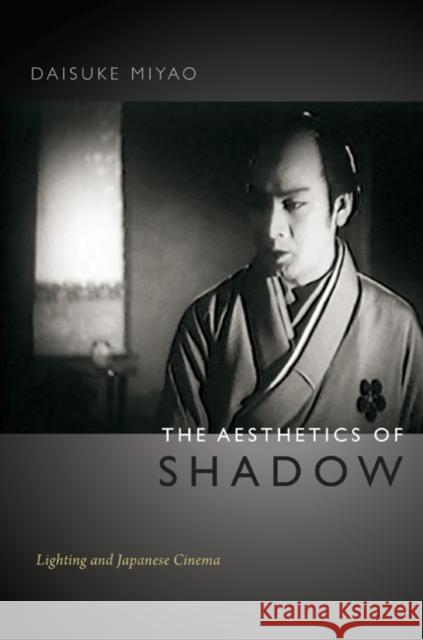
In this revealing study, Daisuke Miyao explores "the aesthetics of shadow" in Japanese cinema in the first half of the twentieth century. This term, coined by the production designer Yoshino Nobutaka, refers to the perception that shadows add depth and mystery. Miyao analyzes how this notion became naturalized as the representation of beauty in Japanese films, situating Japanese cinema within transnational film history. He examines the significant roles lighting played in distinguishing the styles of Japanese film from American and European film and the ways that lighting facilitated the...
In this revealing study, Daisuke Miyao explores "the aesthetics of shadow" in Japanese cinema in the first half of the twentieth century. This term, c...
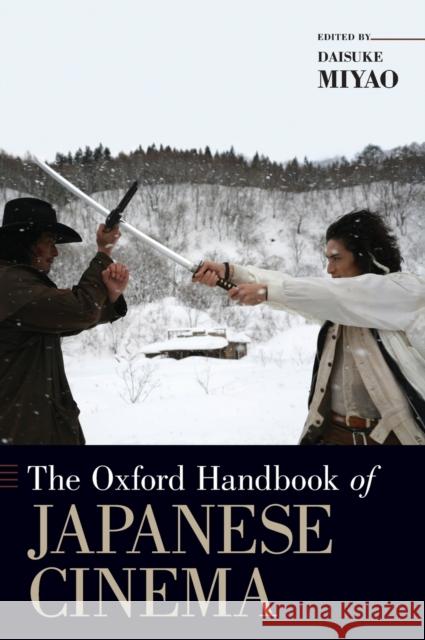
The reality of transnational innovation and dissemination of new technologies, including digital media, has yet to make a dent in the deep-seated culturalism that insists on reinscribing a divide between the West and Japan. The Oxford Handbook of Japanese Cinema aims to counter this trend toward dichotomizing the West and Japan and to challenge the pervasive culturalism of today's film and media studies. Featuring twenty essays, each authored by a leading researcher in the field, this volume addresses productive debates about where Japanese cinema is and where Japanese cinema is...
The reality of transnational innovation and dissemination of new technologies, including digital media, has yet to make a dent in the deep-seated cult...
Transnational Cinematography Studies introduces new perspectives to the discipline of film and media studies. First, this volume focuses on a crucial yet largely unexplored area in film and media studies: the substantial communication between critical studies of cinema and film production practices. This book integrates theories and practices of cinematographic technology. Secondly, Transnational Cinematography Studies expands the scope of film and media studies into the arena of transnationalism. Cinema is now discussed in terms of globalization of audio-visual cultures, with regard to such...
Transnational Cinematography Studies introduces new perspectives to the discipline of film and media studies. First, this volume focuses on a crucial ...