A Berlin Republic brings together writings on the new, united Germany by one of their most original and trenchant commentators, Jürgen Habermas. Among other topics, he addresses the consequences of German history, the challenges and perils of the post-Wall era, and Germany's place in contemporary Europe.
Here, as in his earlier The Past as Future, Habermas emerges as an inspired analyst of contemporary German political and intellectual life. He repeatedly criticizes recent efforts by historical and political commentators to 'normalize' and, in part, to understate the horrors...
A Berlin Republic brings together writings on the new, united Germany by one of their most original and trenchant commentators, Jürgen Habermas. A...
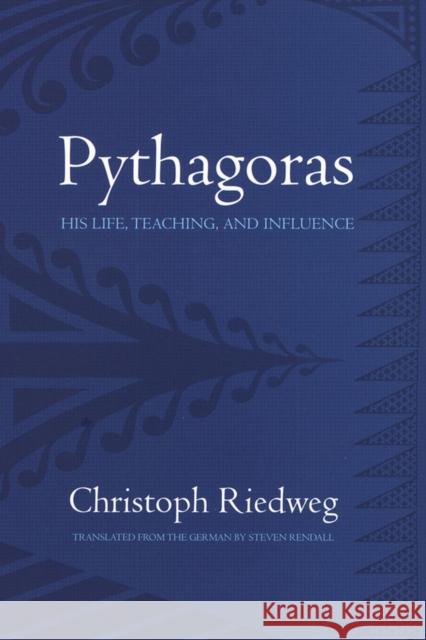
One of the most important mathematical theorems is named after Pythagoras of Samos, but this semi-mythical Greek sage has more to offer than formulas. He is said to have discovered the numerical nature of the basic consonances and transposed the musical proportions to the cosmos, postulating a "harmony of the spheres." He may have coined the words "cosmos" and "philosophy." He is also believed to have taught the doctrine of transmigration of souls and therefore to have advised a vegetarian diet.
Ancient legends have Pythagoras conversing with dogs, bears, and bulls. A distinctly...
One of the most important mathematical theorems is named after Pythagoras of Samos, but this semi-mythical Greek sage has more to offer than formul...
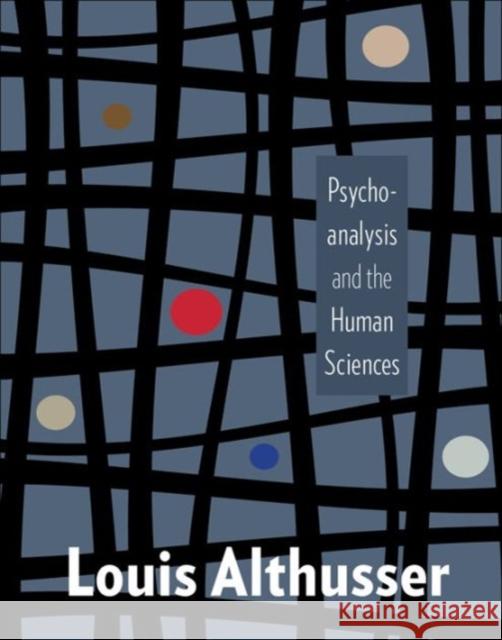
What can psychoanalysis, a psychological approach developed more than a century ago, offer us in an age of rapidly evolving, hard-to-categorize ideas of sexuality and the self? Should we abandon Freud's theories completely or adapt them to new findings and the new relationships taking shape in modern liberal societies? In a remarkably prescient series of lectures delivered in the early 1960s, the French philosopher Louis Althusser anticipated the challenges that psychoanalytic theory would face as politics moved away from structuralist frameworks and toward the elastic possibilities of...
What can psychoanalysis, a psychological approach developed more than a century ago, offer us in an age of rapidly evolving, hard-to-categorize ideas ...
* This work describes and analyses the different roles women have played in the Islamic world, past and present. Starting with Sharia regulations and their implications in societies throughout history, this book addresses the obstacles and opportunities women have faced, and still face, in various Islamic societies.
* This work describes and analyses the different roles women have played in the Islamic world, past and present. Starting with Sharia regulations and ...
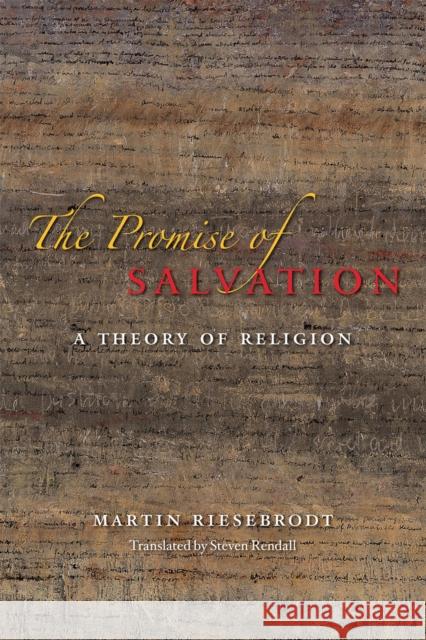
Why has religion persisted across the course of human history? Secularists have predicted the end of faith for a long time, but religions continue to attract followers. Meanwhile, scholars of religion have expanded their field to such an extent that we lack a basic framework for making sense of the chaos of religious phenomena. To remedy this state of affairs, Martin Riesebrodt here undertakes a task that is at once simple and monumental: to define, understand, and explain religion as a universal concept.
Instead of propounding abstract theories, Riesebrodt concentrates on the...
Why has religion persisted across the course of human history? Secularists have predicted the end of faith for a long time, but religions continue ...
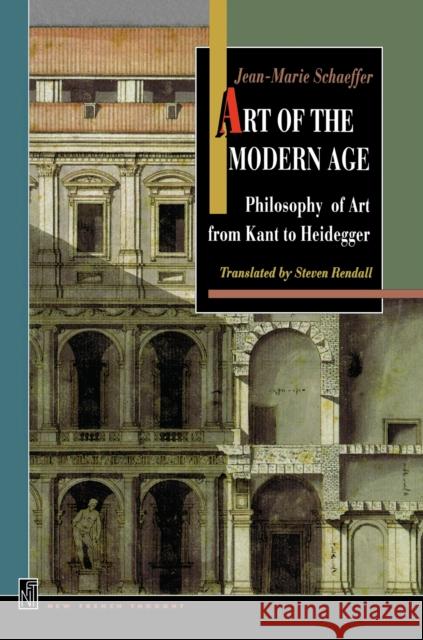
This is a sweeping and provocative work of aesthetic theory: a trenchant critique of the philosophy of art as it developed from the eighteenth century to the early twentieth century, combined with a carefully reasoned plea for a new and more flexible approach to art.
Jean-Marie Schaeffer, one of France's leading aestheticians, explores the writings of Kant, Schlegel, Novalis, Hegel, Schopenhauer, Nietzsche, and Heidegger to show that these diverse thinkers shared a common approach to art, which he calls the "speculative theory." According to this theory, art offers a special kind of...
This is a sweeping and provocative work of aesthetic theory: a trenchant critique of the philosophy of art as it developed from the eighteenth cent...
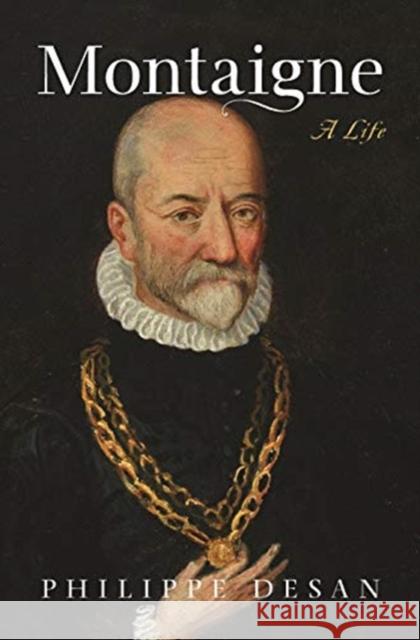
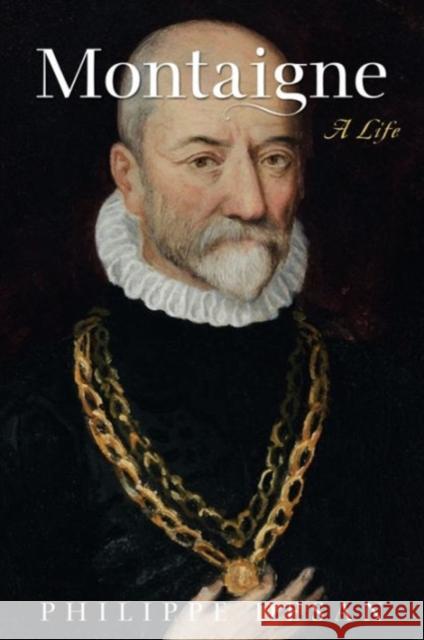
One of the most important writers and thinkers of the Renaissance, Michel de Montaigne (1533-92) helped invent a literary genre that seemed more modern than anything that had come before. But did he do it, as he suggests in his Essays, by retreating to his chateau, turning his back on the world, and stoically detaching himself from his violent times? In this definitive biography, Philippe Desan, one of the world's leading authorities on Montaigne, overturns this longstanding myth by showing that Montaigne was constantly concerned with realizing his political ambitions--and that the...
One of the most important writers and thinkers of the Renaissance, Michel de Montaigne (1533-92) helped invent a literary genre that seemed more mo...