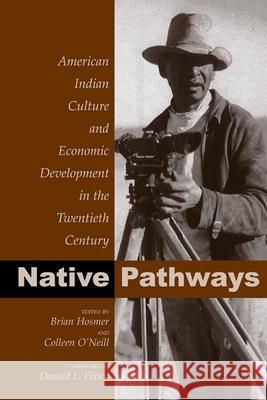
How has American Indians' participation in the broader market - as managers of casinos, negotiators of oil leases, or commercial fishermen - challenged the U.S. paradigm of economic development? Have American Indians paid a cultural price for the chance at a paycheck? How have gender and race shaped their experiences in the marketplace? Contributors to "Native Pathways" ponder these and other questions, highlighting how indigenous peoples have simultaneously adopted capitalist strategies and altered them to suit their own distinct cultural beliefs and practices. Including contributions from...
How has American Indians' participation in the broader market - as managers of casinos, negotiators of oil leases, or commercial fishermen - challenge...
Although it is usually assumed that Native Americans have lost their cultural identity through modernization, some peoples have proved otherwise. Brian Hosmer explores what happened when cultural identity and economic opportunity converged among two Native American communities that used community-based industries to both generate income and sustain their cultures. Comparing a lumber business run by the Menominees of Wisconsin and a salmon cannery established by British Columbian and Alaskan Tsimshian communities known as Metlakatla, Hosmer reveals how each tribe responded to market and...
Although it is usually assumed that Native Americans have lost their cultural identity through modernization, some peoples have proved otherwise. Bria...