Buzz-Cut Dune is an important Fremont-culture village site located on the western margin of Dugway Proving Ground near the Utah-Nevada border. It was discovered during construction activity in 2000.Initial descriptions noted at least five structure floors apparently dating to the Fremont period (AD 500-1200) together with an array of ceramic, groundstone, and chipped stone artifacts. Full-scale excavations revealed a much more complex intermittent occupational pattern over a period of at least 5,000 years beginning with Archaic foragers up through proto-historic times. Throughout this...
Buzz-Cut Dune is an important Fremont-culture village site located on the western margin of Dugway Proving Ground near the Utah-Nevada border. It was ...
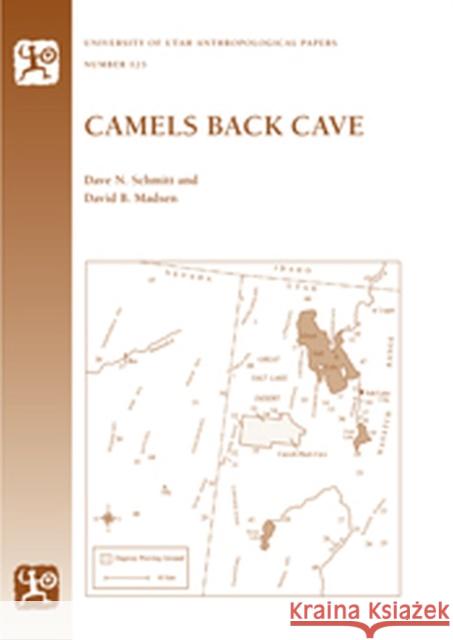
Camels Back Cave is in an isolated limestone ridge on the southern edge of the Great Salt Lake Desert. Recent archaeological investigations there have exposed a series of stratified deposits spanning the entire Holocene era (10,000 BP-present), deposits that show intermittent human occupations dating back through the past 7,600 years. Most human visits to the cave were brief--many likely representing overnight stays--and visitors did not dig pits or move sediment. As a result, fieldworkers were able...
University of Utah Anthropological Papers No. 125
Anthropology and Archaeology
Camels Back Cave is in an isolated limestone ridge on th...
Were the earliest inhabitants of the Great Basin 'Paleoindians' in the traditional sense? Were they highly mobile foragers? Did they hunt large, now extinct animals like mammoth, horse, and camel? Great Basin archaeologists have argued that the earliest inhabitants possessed an organization strategy of mixed 'Paleoindian' and 'Archaic' lifeways, referring to them as 'Paleoarchaic.' Recent excavations of rock shelters and caves, coupled with innovative studies of the surface archaeological record have increased our understanding of human organization in the Great Basin during the late...
Were the earliest inhabitants of the Great Basin 'Paleoindians' in the traditional sense? Were they highly mobile foragers? Did they hunt large, now e...
About 12,000 years ago, a major river ran from the Sevier Basin to the Great Salt Lake, feeding a wetland delta system and creating riparian habitat along its length. But after three thousand years the river dried up and the surrounding lands became more like what we see today. Because the Old River Bed Delta experienced less environmental and human disturbance than other areas, many of the Paleoarchaic sites found there have remained relatively intact a rarefind in the Great Basin. This book presents a comprehensive synthesis of a decade of investigations conducted by research teams...
About 12,000 years ago, a major river ran from the Sevier Basin to the Great Salt Lake, feeding a wetland delta system and creating riparian habita...