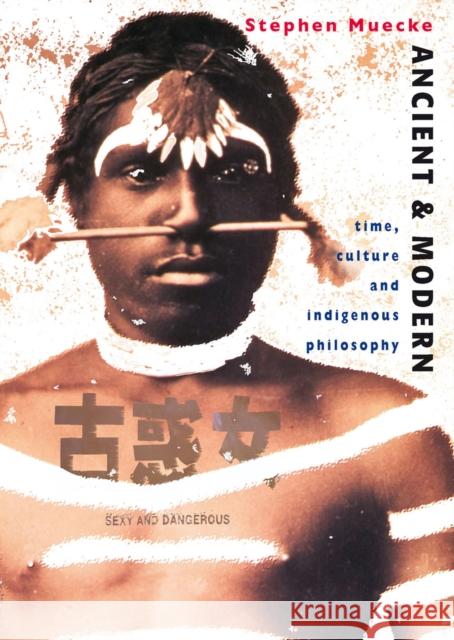
How might we think and talk about indigenous philosophy? Why has Aboriginal knowledge not been given the status of philosophical knowledge, but treated by whites rather as culture or history? There is a quarrel about whose antiquity is at the foundation of Australian culture, and why contemporary forms of Aboriginality are marginal to Australia's modernity. These are the starting points for the essays contained in Stephen Muecke's original and challenging book.
How might we think and talk about indigenous philosophy? Why has Aboriginal knowledge not been given the status of philosophical knowledge, but treate...
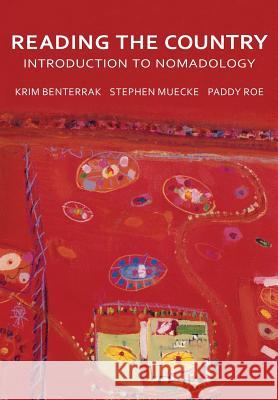
Explores the meaning and politics of place (Roebuck Plains) through Aboriginal narratives, songs, conversations, photographs and paintings, together with European historical, geographic and geological knowledge; linked by a series of explanatory, exploratory and analytical essays on history, anthropology, critical theory and painting; interview with Peter Yu, NAC representative.
Explores the meaning and politics of place (Roebuck Plains) through Aboriginal narratives, songs, conversations, photographs and paintings, together w...
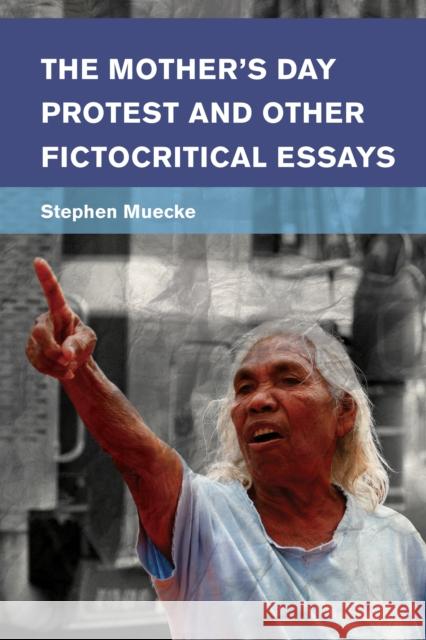
As a genre that confounds the distinction between fiction and non-fiction, fictocriticism continues to gain currency. It solves a problem for researchers and writers who do not wish to be held to that somewhat artificial division, and who consider their research methods necessarily to include the stylistic experiments that show their research and thought processes. Research, knowledge of the world, that continues to be 'written up', 'after the fact' in the usual academic genres, has a tendency to re-inscribe the status quo. The world stays the way it is; change, surprise and experiment elude...
As a genre that confounds the distinction between fiction and non-fiction, fictocriticism continues to gain currency. It solves a problem for research...
As a genre that confounds the distinction between fiction and non-fiction, fictocriticism continues to gain currency. It solves a problem for researchers and writers who do not wish to be held to that somewhat artificial division, and who consider their research methods necessarily to include the stylistic experiments that show their research and thought processes. Research, knowledge of the world, that continues to be 'written up', 'after the fact' in the usual academic genres, has a tendency to re-inscribe the status quo. The world stays the way it is; change, surprise and experiment elude...
As a genre that confounds the distinction between fiction and non-fiction, fictocriticism continues to gain currency. It solves a problem for research...