An ambitious, original work, The Politics of Sociability is Stefan-Ludwig Hoffmann's exploration of the social and political significance of Freemasonry in German history. Drawing on de Tocqueville's theory that without civic virtue there is no civil society, and that civic virtue unfolds only through the social interaction between citizens, Hoffmann examines the critical link between Freemasonry and the evolution of German civil society in the late nineteenth century. The practice of Masonic sociability reflected an enlightened belief in the political significance of moral virtue...
An ambitious, original work, The Politics of Sociability is Stefan-Ludwig Hoffmann's exploration of the social and political significance of...
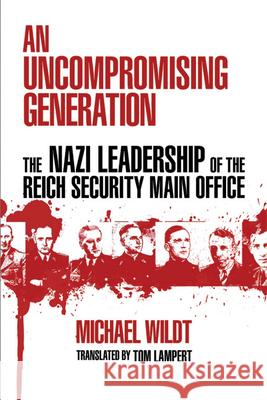
In An Uncompromising Generation, Michael Wildt follows the journey of a strikingly homogenous group of young academics--who came from the educated, bourgeois stratum of society--as they started to identify with the Nazi concept of Volksgemeinschaft, which labeled Jews as enemies of the people and justified their murder. Wildt's study traces the intellectual evolution of key members of the Reich Security Main Office (RSHA) from their days as students until the end of World War II. Established in 1939, this office fused together the Gestapo, the Criminal Police, and the...
In An Uncompromising Generation, Michael Wildt follows the journey of a strikingly homogenous group of young academics--who came from the educa...