Archaeological excavations at 12 Arthur Street in 2001-02 produced new evidence for the Roman riverfront development which constitutes an important addition to our knowledge of Roman London's foreshore, its waterfront, quays and buildings. This study brings to light new evidence for the Claudian waterfront and construction of the terracing along the natural slope of the riverbank. Post-Boudican and Hadrianic developments included the construction of two, more solid, timber quays built in c.AD 70-80/3 and subsequently AD 120 as tidal regression generally hastened the decline of the port.The...
Archaeological excavations at 12 Arthur Street in 2001-02 produced new evidence for the Roman riverfront development which constitutes an important ad...
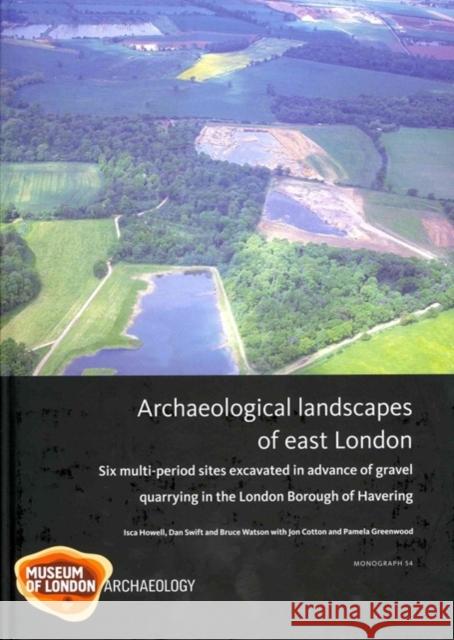
Six multi-period archaeological sites investigated in advance of gravel extraction in the London Borough of Havering between 1963 and 1997 form the basis of a landscape history of the Rainham and Upminster area. Residual Mesolithic finds from the study area include an adze. The first significant activity locally was an Early Neolithic ring ditch, which remained in use for about a millennium. During the Bronze Age the area was transformed by extensive woodland clearance and the creation of rectilinear fields and scattered farmsteads. The Iron Age saw more intensive landscape utilisation and...
Six multi-period archaeological sites investigated in advance of gravel extraction in the London Borough of Havering between 1963 and 1997 form the ba...