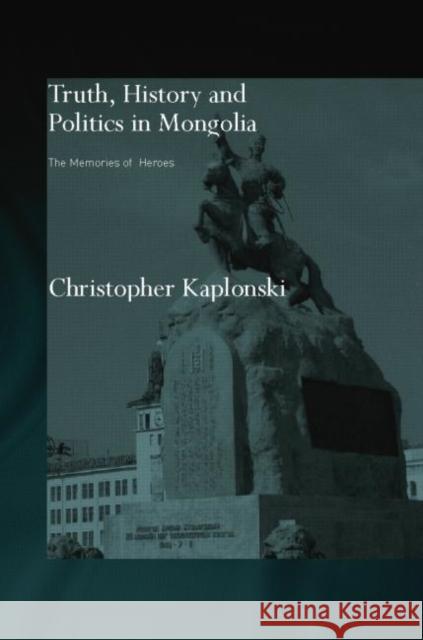
Using Mongolia as its example, this book examines how knowledge is transmitted and transformed in light of political change by looking at shifting conceptions of historical figures. It suggests that the reflection of people's concept of themselves is a much greater influence in the writing of history than has previously been thought and examines in detail how history was used to subvert the socialist project in Mongolia. This is the first study of the symbolic struggle over who controlled 'the past' and the 'true' identity of a Mongol, fought between the ruling party and its protesters during...
Using Mongolia as its example, this book examines how knowledge is transmitted and transformed in light of political change by looking at shifting con...
Before becoming the second socialist country in the world (after the Soviet Union) in 1921, Mongolia had been a Buddhist feudal theocracy. Combatting the influence of the dominant Buddhist establishment to win the hearts and minds of the Mongolian people was one of the most important challenges faced by the new socialist government. It would take almost a decade and a half to resolve the "lama question," and it would be answered with brutality, destruction, and mass killings. Chris Kaplonski examines this critical, violent time in the development of Mongolia as a nation-state and its...
Before becoming the second socialist country in the world (after the Soviet Union) in 1921, Mongolia had been a Buddhist feudal theocracy. Combatti...