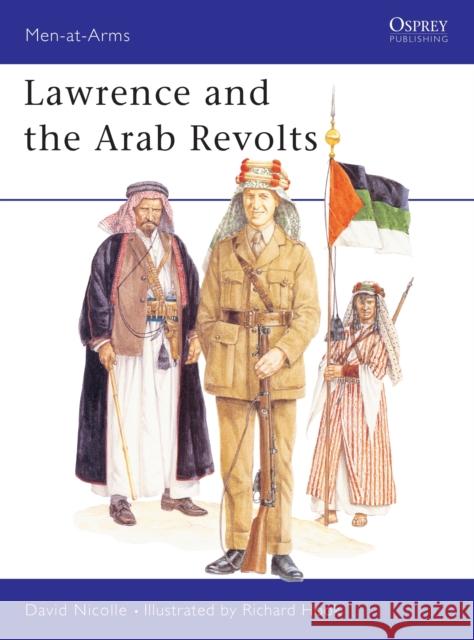
The Great War of 1914-18 is often seen as one major battleground - the Western Front - with numerous 'side-shows'. The other battle zones were not side-shows to those involved, however, although the local inhabitants often fought for motives which remained a closed book to their European allies or foes. David Nicolle relates the story of the Arab Revolts (1916-18), and discusses just how important (or unimportant) was the role of T. E. Lawrence in the affair, in a fascinating text backed by a fine collection of contemporary photographs and eight full page colour plates by Richard Hook.
The Great War of 1914-18 is often seen as one major battleground - the Western Front - with numerous 'side-shows'. The other battle zones were not sid...
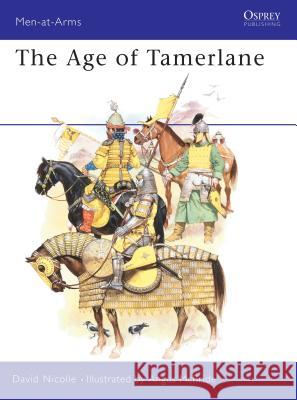
Tamerlane or Timur-i-Lenk ('Timur the Lame') is one of the most extraordinary conquerors in history. In the late 14th century his armies seized huge territories from the borders of Mongolia to Palestine and Anatolia. His passage was marked by massacres that outdid even those of the Mongols for sheer savagery. Timur's career was unequalled since Alexander the Great in terms of constant battlefield success. Only in his youth, while recovering his family estates south of Samarqand, did he face occasional defeat. This title tells the remarkable story of Timur and details the organisation,...
Tamerlane or Timur-i-Lenk ('Timur the Lame') is one of the most extraordinary conquerors in history. In the late 14th century his armies seized huge t...
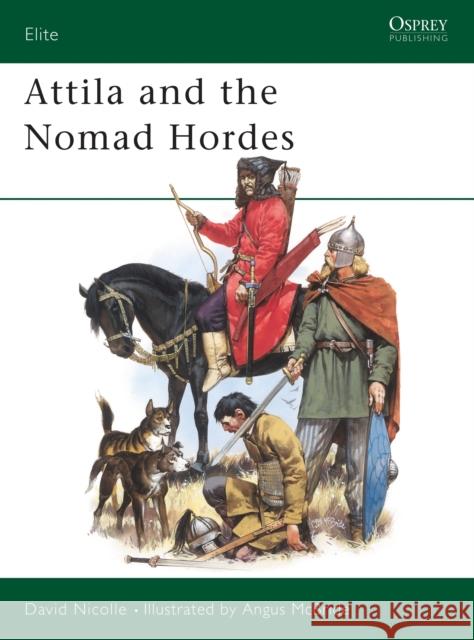
Of all the conquerors who swept out of Central Asia, two names stand out in European memory Attila the Hun and Genghis Khan the Mongol. Both are remembered for massacres and devastation; yet whereas Genghis is also famous for the laws he imposed on half of Asia and for the trade which flourished under Mongol rule, Attila's notoriety seems unrelieved by positive achievements. But what was Attila's short-lived empire really like? What happened to the Huns afterwards, and what role did the nomads of Central Asia play in the centuries between Attila and Genghis Khan?"
Of all the conquerors who swept out of Central Asia, two names stand out in European memory Attila the Hun and Genghis Khan the Mongol. Both are remem...
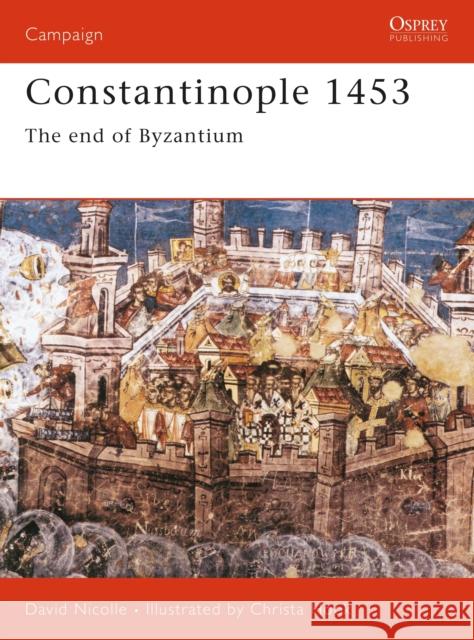
This Osprey title details the epic four-month siege of the city of Constantinople in 1453, last vestige of the once mighty Roman and Byzantine Empires. Mehmet 'The Conqueror' led an army of 80,000 men with a massive siege train against the city. Defending were a mere 10,000 men under the Emperor Constantine XI. The Turkish artillery battered the ancient city walls mercilessly, levelling a large section. A gallant defence held off the massive Turkish assault for several hours. Refusing appeals to flee, Constantine returned to the breaches and fought until overwhelmed and killed. Thus died the...
This Osprey title details the epic four-month siege of the city of Constantinople in 1453, last vestige of the once mighty Roman and Byzantine Empires...
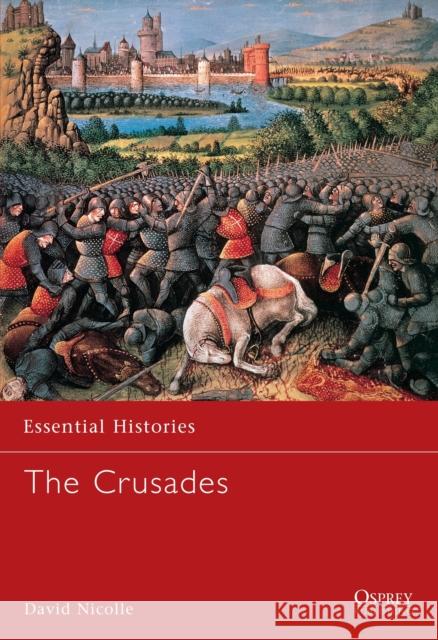
Born amid immense suffering and bloodshed, the Kingdom of Jerusalem remained a battlefield for almost 200 years. The Crusades gave rise to the Military Orders of the Templars and Hospitallers, and were a backdrop to the careers of some of history's most famous leaders including Richard 'The Lionheart' and Saladin. On occasion the savagery of the Crusaders left their opponents reeling, creating frictions that survived for more than 700 years. At the same time, as this book lavishly illustrates, art, architecture and learning all benefited from new knowledge the Crusaders brought back from the...
Born amid immense suffering and bloodshed, the Kingdom of Jerusalem remained a battlefield for almost 200 years. The Crusades gave rise to the Militar...
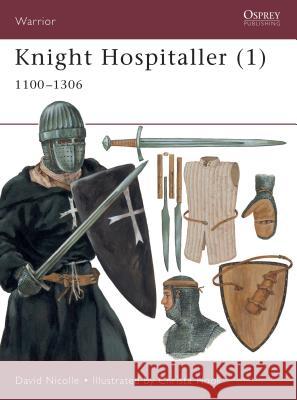
Unlike their sometime rivals the Templars, the Order of St John of the Hospital of Jerusalem (or the Hospitallers as they are better known) was not created as a result of the First Crusade in 1099: rather, it was probably established by a group of Italian merchants from Amalfi in the mid-11th century. However, as a consequence of the crusading movement, the Hospitallers became recognised experts in the military capabilities of opposing Islamic armies. This book, the first of two to examine the lifestyle, experiences and military role of the Hospitaller knight, covers the period from the...
Unlike their sometime rivals the Templars, the Order of St John of the Hospital of Jerusalem (or the Hospitallers as they are better known) was not cr...
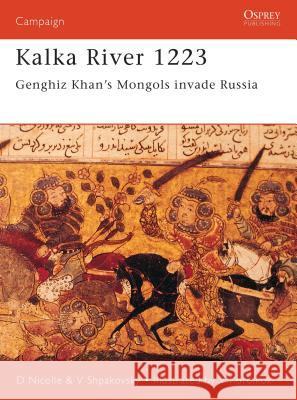
Osprey's study of the Mongols' invasion of Russia. In 1221, Genghiz, Great Khan of the Mongols, ordered an armed reconnaissance expedition into Russia commanded by Subodei Bahadur and Jebei Noyon 'The Arrow'. The consequences for the history of Europe were incalculable. The decisive Mongol victory at Kalka River, opened up vast regions of Russia and Eastern Europe to Mongol conquest. Genghiz ordered his victorious army to return eastwards, delaying the final cataclysm by a few years. Genghiz died in 1227, but within 10 years his son Ogedei ordered a return to Russia to complete the conquest....
Osprey's study of the Mongols' invasion of Russia. In 1221, Genghiz, Great Khan of the Mongols, ordered an armed reconnaissance expedition into Russia...
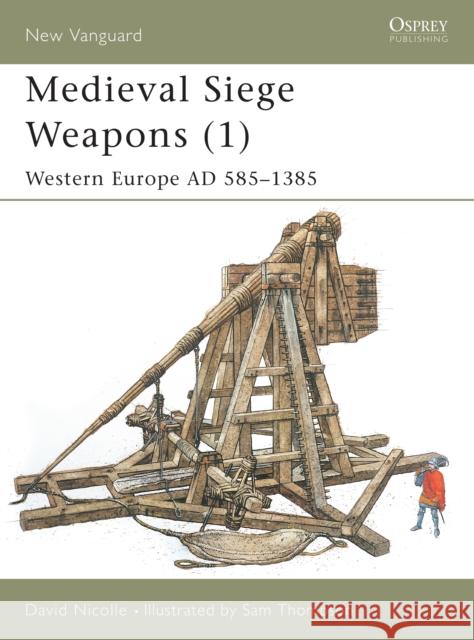
The Medieval era was a period of huge variety and invention in siege warfare. Before the use of cannon and other gun-powder artillery, siege engines relied on assorted sources of power, from torsion 'energy storage' systems to man-power, counter-balances and others. This book reveals how technological traditions from the Graeco-Roman world, Persia, India and above all China made a massive contribution to siege warfare techniques. It also covers developments in military engineering, such as mining, counter-mining, the breaking of walls, the use of noxious and chemical fumes and the use of...
The Medieval era was a period of huge variety and invention in siege warfare. Before the use of cannon and other gun-powder artillery, siege engines r...
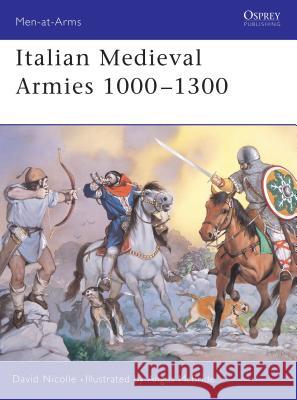
As early as the 11th century, Italian warfare was developing along lines which were unique in medieval Europe. This fragmented, cosmopolitan region, increasingly rich from international trade, saw the rise of independent cities able to fund armies of urban militia, sometimes defying the traditional feudal aristocracy. Against this background regional powers - the Normans, the Papacy, the German Emperors, the Angevins and Aragonese - manoeuvred for advantage. This engrossing account of the armies of northern and southern Italy - their organisation, command structure, strategy, tactics and...
As early as the 11th century, Italian warfare was developing along lines which were unique in medieval Europe. This fragmented, cosmopolitan region, i...
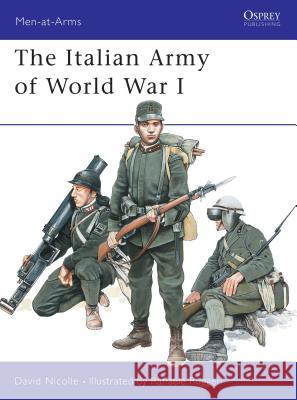
The dilemma of the young Italian kingdom and the experience of her army in World War I (1914-1918) were unique among the combatant nations. Late to enter the war against the Central Powers, she faced a massively defended Austro-Hungarian front in the north, including strong mountain features, as well as distractions in the Balkans and a simultaneous rebellion in her Libyan colony. Costly and repeated battles on the Isonzo front culminated in the disaster of Caporetto in October 1917, followed by a remarkable revival and eventual victory in 1918. This concise study describes and illustrates...
The dilemma of the young Italian kingdom and the experience of her army in World War I (1914-1918) were unique among the combatant nations. Late to en...