Nineteen months before the D-day invasion of Normandy, Allied assault forces landed in North Africa in Operation TORCH, the first major amphibious operation of the war in Europe. Under the direction of Gen. Dwight D. Eisenhower, AUS, Adm. Andrew B. Cunningham, RN, Admiral H. Kent Hewitt, USN, and others, the Allies kept pressure on the Axis by attacking what Winston Churchill dubbed "the soft underbelly of Europe." The Allies seized the island of Sicily, landed at Salerno and Anzio, and established a presence along the coast of southern France.
With Utmost Spirit takes a...
Nineteen months before the D-day invasion of Normandy, Allied assault forces landed in North Africa in Operation TORCH, the first major amphibious ...
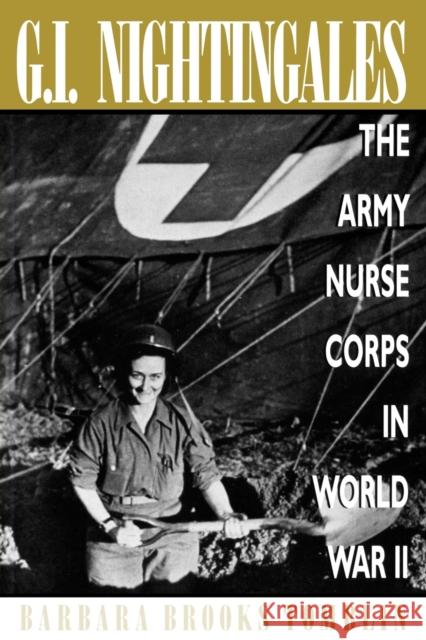
"Weaving together information from official sources and personal interviews, Barbara Tomblin gives the first full-length account of the U.S. Army Nurse Corps in the Second World War. She describes how over 60,000 army nurses, all volunteers, cared for sick and wounded American soldiers in every theater of the war, serving in the jungles of the Southwest Pacific, the frozen reaches of Alaska and Iceland, the mud of Italy and northern Europe, or the heat and dust of the Middle East. Many of the women in the Army Nurse Corps served in dangerous hospitals near the front lines -- 201 nurses...
"Weaving together information from official sources and personal interviews, Barbara Tomblin gives the first full-length account of the U.S. Army N...
One of the lesser known stories of the Civil War is the role played by escaped slaves in the Union blockade along the Atlantic coast. From the beginning of the war, many African American refugees sought avenues of escape to the North. Due to their sheer numbers, those who reached Union forces presented a problem for the military. The problem was partially resolved by the First Confiscation Act of 1861, which permitted the seizure of property used in support of the South's war effort, including slaves. Eventually regarded as contraband of war, the runaways became known as contrabands. In...
One of the lesser known stories of the Civil War is the role played by escaped slaves in the Union blockade along the Atlantic coast. From the begi...
Flowing from its source in northern Minnesota to the Gulf of Mexico, the Mississippi River borders or passes through ten different states and serves as one of the most important transportation systems in the United States. During the Civil War, both sides believed that whoever controlled the river would ultimately be victorious. Cotton exports generated much-needed revenue for the Confederacy, and the Mississippi was also the main conduit for the delivery of materials and food. Similarly, the Union sought to maintain safe passage from St. Louis, Missouri, to Cairo, Illinois, but also...
Flowing from its source in northern Minnesota to the Gulf of Mexico, the Mississippi River borders or passes through ten different states and serve...