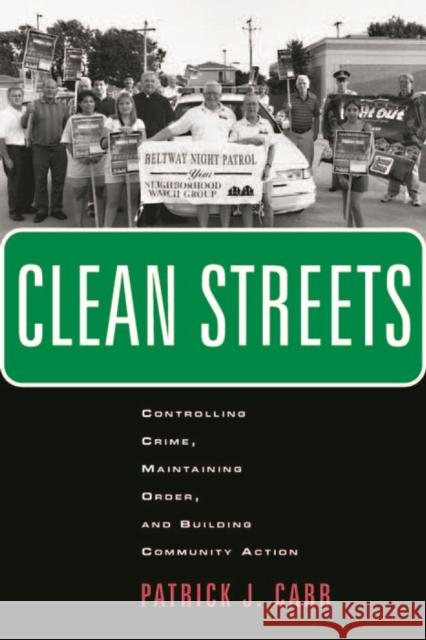
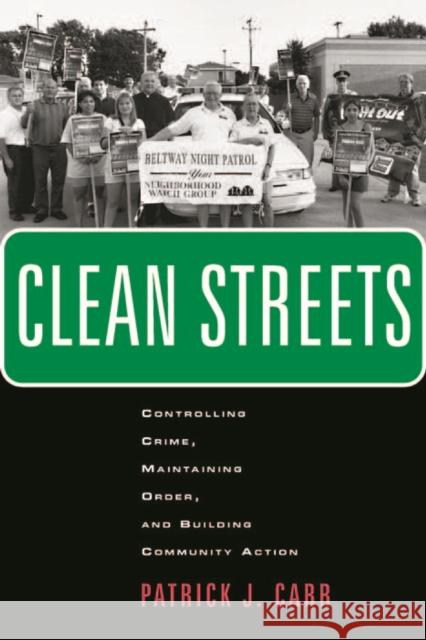
With the close proximity of gangs and the easy access to drugs, keeping urban neighborhoods safe from crime has long been a central concern for residents. In Clean Streets, Patrick Carr draws on five years of research in a white, working-class community on Chicago's South side to see how they tried to keep their streets safe. Carr details the singular event for this community and the resulting rise of community activism: the shootings of two local teenage girls outside of an elementary school by area gang members. As in many communities struck by similar violence, the shootings...
With the close proximity of gangs and the easy access to drugs, keeping urban neighborhoods safe from crime has long been a central concern for res...
With the close proximity of gangs and the easy access to drugs, keeping urban neighborhoods safe from crime has long been a central concern for residents. In Clean Streets, Patrick Carr draws on five years of research in a white, working-class community on Chicago's South side to see how they tried to keep their streets safe. Carr details the singular event for this community and the resulting rise of community activism: the shootings of two local teenage girls outside of an elementary school by area gang members. As in many communities struck by similar violence, the shootings led to...
With the close proximity of gangs and the easy access to drugs, keeping urban neighborhoods safe from crime has long been a central concern for res...
In 2001, with funding from the MacArthur Foundation, sociologists Patrick J. Carr and Maria J. Kefalas moved to Iowa to understand the rural brain drain and the exodus of young people from America's countryside. They met and followed working-class "stayers"; ambitious and college-bound "achievers"; "seekers," who head off to war to see what the world beyond offers; and "returners," who eventually circle back to their hometowns. What surprised them most was that adults in the community were playing a pivotal part in the town's decline by pushing the best and brightest young people to leave....
In 2001, with funding from the MacArthur Foundation, sociologists Patrick J. Carr and Maria J. Kefalas moved to Iowa to understand the rural brain dra...
What is it like to become an adult in twenty-first-century America? This book takes us to four very different places--New York City, San Diego, rural Iowa, and Saint Paul, Minnesota--to explore the dramatic shifts in coming-of-age experiences across the country. Drawing from in-depth interviews with people in their twenties and early thirties, it probes experiences and decisions surrounding education, work, marriage, parenthood, and housing. The first study to systematically explore this phenomenon from a qualitative perspective, Coming of Age in America offers a clear view of how...
What is it like to become an adult in twenty-first-century America? This book takes us to four very different places--New York City, San Diego, rural ...