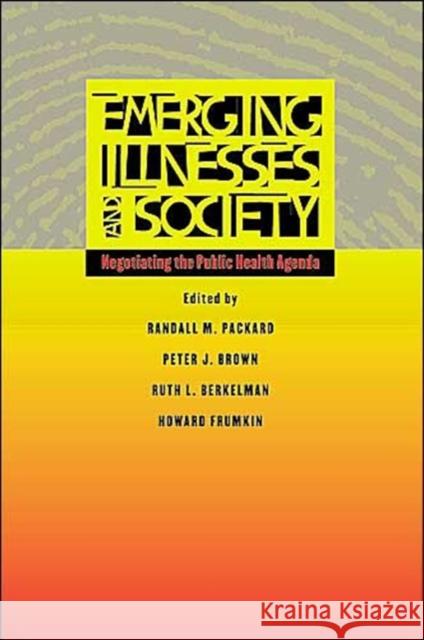
How do new diseases become part of the public health agenda? Emerging Illnesses and Society brings together historians, sociologists, epidemiologists, public health experts, and others to explore this vital issue. Contributors describe the processes by which patients' groups interact with medical researchers, public health institutions, and the media to identify and address previously unknown illnesses, including multiple sclerosis, Tourette syndrome, AIDS, lead poisoning, Lyme disease, and hepatitis C. The introductory chapter develops a general theoretical model of the social...
How do new diseases become part of the public health agenda? Emerging Illnesses and Society brings together historians, sociologists, epidem...
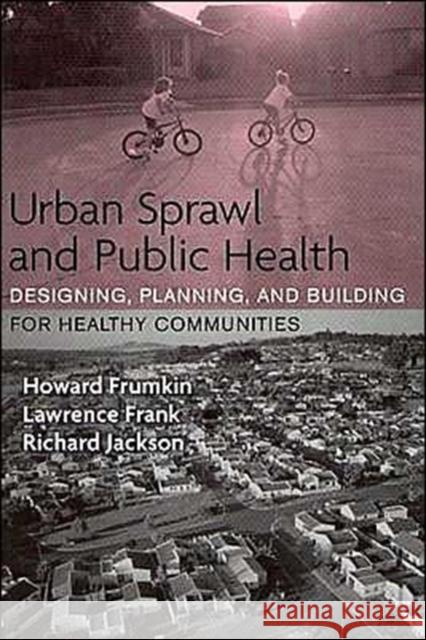
In Urban Sprawl and Public Health, three of the nation's leading public health and urban planning experts explore an intriguing question: How does the physical environment in which we live affect our health? For decades, growth and development in our communities has been of the low-density, automobile-dependent type known as sprawl. The authors examine the direct and indirect impacts of sprawl on human health and well-being, and discuss the prospects for improving public health through alternative approaches to design, land use, and transportation. Urban Sprawl and Public Health offers a...
In Urban Sprawl and Public Health, three of the nation's leading public health and urban planning experts explore an intriguing question: How does the...